


Our actions
Making sense of Web3 for sustainability
Eight days of immersion in El Salvador —the first country to adopt Bitcoin as legal tender— to understand, alongside grassroots organisations in three territories, what role Web3 can play in the present fights and desirable futures of the Global South.
Partner
FCDO · UK Government · Frontier Tech Hub
Year
2022 · El Salvador
Services
Field research · Strategic foresight · Community co-creation
CHALLENGE
Two monetary transitions coexist in El Salvador: a top-down one (the Bitcoin Law) and a bottom-up one (community circular economies). What opportunities and challenges does Web3 really pose in Latin America for international cooperation institutions?
APPROACH
We immersed ourselves for eight days in three territories —San Salvador, El Zonte and Suchitoto— through workshops, ethnographic observation and interviews. Using the Three Horizons method we co-imagined, with 18 activists and grassroots organisations, futures where technology becomes an ally of their fights.
IMPACT
Four archetypal futures for 2040 co-created with communities, 9 drivers and 8 barriers of Bitcoin adoption, and six findings to help cooperation steer Web3 toward socially just futures.
Two paths to the same currency
El Salvador is the world’s first nation-scale Web3 experiment. But inside the country there is not one transition: there are two, and they could hardly look more different.
Top-down · Suchitoto
The law
The Bitcoin Law imposes the currency at national scale: ATMs, promoters and a one-size-fits-all strategy for diverse cultures. Adoption advances amid friction, mistrust and the trauma of past monetary transitions.
Bottom-up · El Zonte
The community
Bitcoin Beach grew from community leaders, young people and trust built over years. The local wallet went from 3,000 to 120,000 users in two years. The lesson: the transition depends more on trust than on technology.

«Companies come with the promise of development and the generation of employment, hire few people under unfair working conditions, and generate environmental damage that affects many inhabitants —for example, by contaminating water sources. What is development? Economic development for whom? Is it for the communities?»
Daniel Rivas
Celina Ramos community, ADESCO · Suchitoto, El Salvador

Sentipensar the territory
Foresight is not done from the desk alone. We travelled through three territories with contrasting adoption dynamics: futures workshops with grassroots organisations, observation in everyday life —paying through the Lightning Network, using the Chivo ATMs— and interviews with key actors such as the co-founders of Bitcoin Beach.
With Bill Sharpe’s Three Horizons we mapped what to transform in the dominant regime, which innovations are already emerging and which seeds of the future to cultivate. As Arturo Escobar proposes: «We must sentipensar (feel-think) new notions about what is real and thus what is possible.»
8
days of immersion
3
territories
18
activists in workshops
24
inspiring cases explored
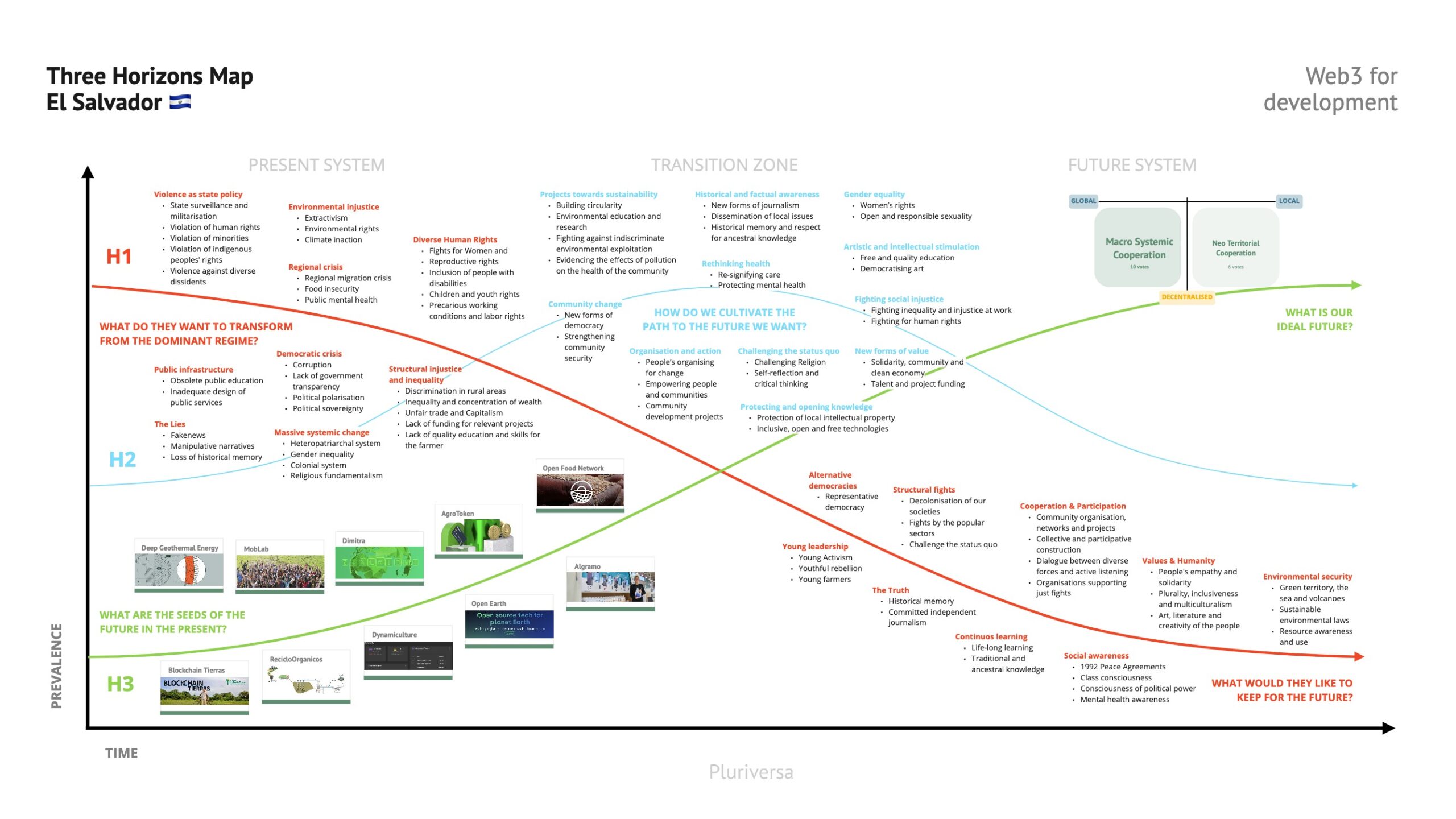
The Three Horizons map co-created in the workshops: the crisis of the present, the innovations in transition and the seeds of the ideal future.
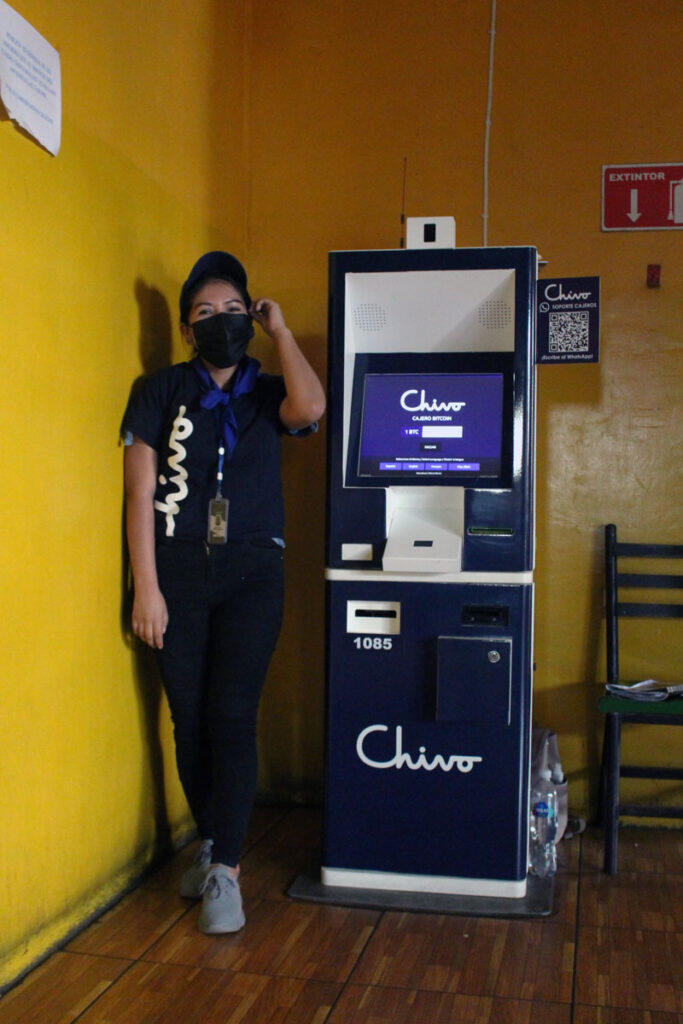
The Chivo ATMs of the national strategy
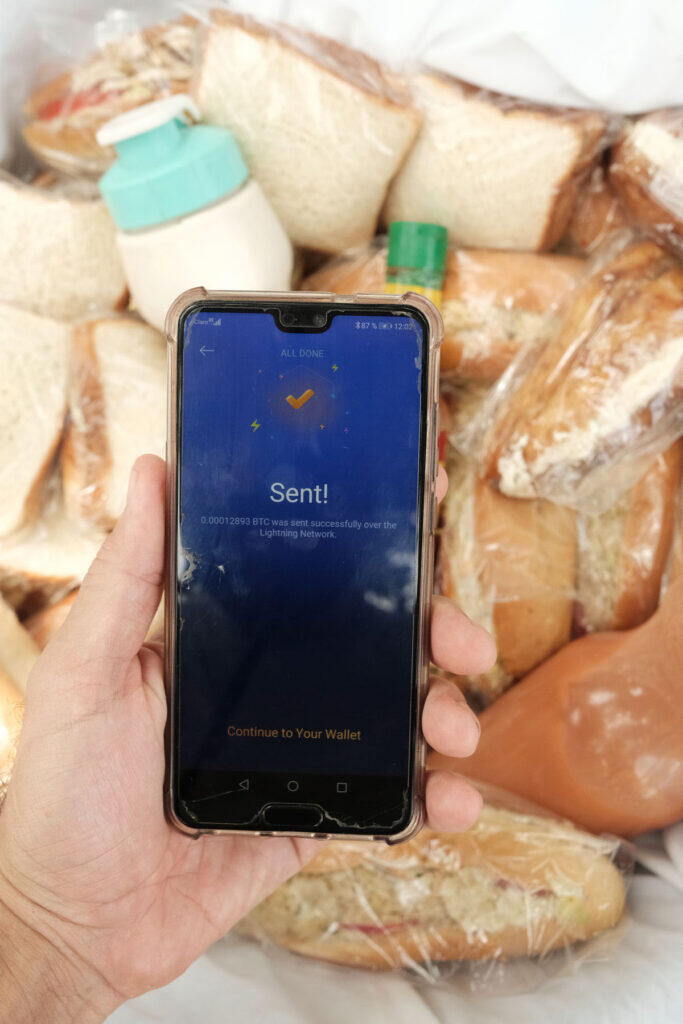
Paying through the Lightning Network in El Zonte

The colón: the memory of past transitions
Four futures for 2040
Across two axes —global ↔ local and centralised ↔ decentralised— we co-imagined with participants four archetypal futures for El Salvador.
Global · Centralised
Planetary Eco-Authoritarianism
A world government rations resources to save the planet. Green surveillance, an immutable citizen ID and local resistances.
Global · Decentralised
Macro Systemic Cooperation
Beyond colonial borders, a planetary society coordinates the climate crisis as a network.
★ THE FUTURE PREFERRED BY COMMUNITIES
Local · Centralised
Ecological Micro-Dictatorships
Eco-totalitarian leaders control territories and resources; countercultural activism is reborn.
Local · Decentralised
Neo Territorial Cooperation
The recommunalisation of life: territorial DAOs, neo-barter and the golden age of cooperatives.
Communities chose decentralised, cooperative futures without hesitation.
Bitcoin adoption in real life
We observed the country’s first Web3 experiment up close: paying, failing and talking with shopkeepers, detractors and enthusiasts. This is what drives adoption —and what holds it back—.
What drives it
- Local leadership — community leaders who transfer their earned trust to the currency.
- Children and youth — they learn first and teach their families; 13-year-olds already manage wallets.
- Banking for all — only 36% of adults have a bank account; Bitcoin includes minors and the undocumented.
- Communal rituals — festivals and events that anchor new meanings.
- Support network and brand — Hope House, donors, developers and the Bitcoin Beach brand.
- Merchants and infrastructure — a local wallet designed with shopkeepers, the Lightning Network and ATMs.
What holds it back
- Economic fragility — 30.7% live day to day: volatility turns the currency into a speculative luxury.
- Politicisation — «the president owns our bitcoins»: the political flag distorts the technology.
- Monetary trauma — forced dollarisation and counterfeit bills left mistrust behind.
- One-size-fits-all strategy — standard solutions for diverse cultures alienate communities.
- Digital exclusion and usability — only 50.5% have internet access; multiple QRs and confusing units break trust.
- The wound of extractivism — the mining history fuels resistance to Bitcoin’s energy mining.
From the field to the finding
From the 9 drivers and 8 barriers we identified in the field, we distilled six enablers of systemic change for international cooperation.
Education drives disruptive change
Children and the unbanked access the tokenised economy without KYC bureaucracy. An educated population is the best asset for the coming revolution.
The Bitcoin snowball effect
Every industry with a presence in El Salvador is already exposed to Bitcoin. Corporate adoption can help stabilise volatility.
Bottom-up, top-down feedback loops
Initiatives scale from the ground up. National and international support must nurture and connect them, not replace them.
Decentralisation under centralisation
Private satellite connectivity threatens the very purpose of Web3. Regulating that concentration of power is urgent.
Localising energy transitions
Clean, community-run mining with shared governance and remuneration, against the scars of extractivism.
Beyond a monetary transition
The separation of money and state opens a Second Renaissance: the «Decentralised Society» (DeSoc).
Trust is the infrastructure
The success of a monetary transition depends less on economic technicalities than on the continuous building of trust with communities. In El Salvador we saw it up close: where there were leaders, children and communal rituals, Bitcoin flourished; where it arrived by decree, suspicion flourished instead.
Let's bring foresight to your territory
Field research, strategic foresight and community co-creation to anticipate change and decide better under uncertainty. What comes next is designed by talking: 30 minutes, no slides, no commitment.