







The past 10 years had meant for Nazir more work than he would have ever expected. Not even in his wildest dreams would he have imagined that by 2035, energy storage technologies like thermal energy storage and organic flow batteries would become so popular that he, a leading expert in the field, would travel the world supervising international projects and improving people’s lives.
Once a young boy living in a small rural town with barely any electricity, he was now working on making cheap and reliable renewable energy a reality in many remote parts of the world. Having implemented his unpatented and open-source storage system in various Asian mega-cities, as well as in the regions previously known as LMICs, he now wanted to make it possible for everyone to enjoy its benefits. He wanted to make stuff of fiction like living in buildings that use thermal energy for central heating and cooling a reality for millions.
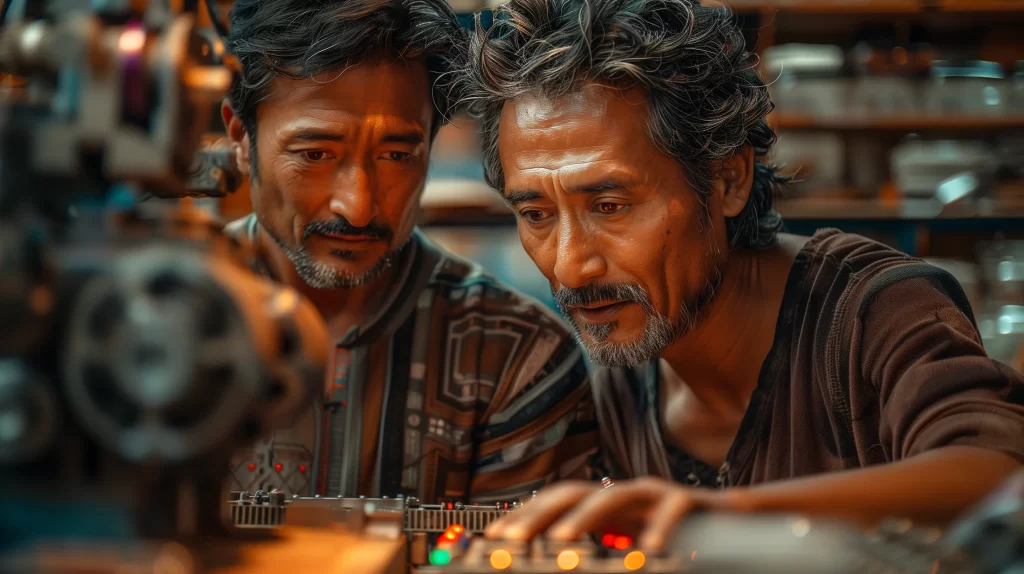
Nazir came from a humble rural background, understanding first-hand some of the common problems communities face.
The technology had proven very reliable, and most importantly, engineers were able to find ways to scale it at a reasonable cost for practical use cases like large-scale cooking systems that were not dependent on burning fossil fuels. Although sometimes high-efficiency recycled metals were needed, finding them was relatively easy. The same could not be said about other more popular technologies that never really made it to the point of reaching a broad audience. Although private investors and governments alike went crazy about Nazir’s thermal energy storage, he was aware that the polycrises had helped. If it hadn’t been for the multiple changes that occurred across the global landscape, the world would have probably kept on going in the direction of what the financial markets considered to be best.
In 2025, when the world was close to an ecological collapse, a global supply chain breakdown, and mounting social unrest, Nazir was just a doctorate student working on sustainable energy technologies. He still remembered how he had been lucky to study under the guidance of Professor Amanda and had learned not only the fundamentals of what became known as clean energy storage technologies but also about the importance of creating technology that serves people. At the time, few would have imagined that locally autonomous energy storage systems were possible.

The intermittence of renewable energy systems was a major blocker for its widespread adoption.
Professor Amanda was the first person to introduce Nazir to the African idea of Ubuntu, or as he explained it, “humanity towards others.” This profoundly altered his views on how technology works and what is possible. He began to participate in small projects where cooperatives organised themselves to store cheap renewable energy for communities in need of economic development. There he understood the impact business models can have when it comes to adapting a technology to local needs. Having access to cheap energy was the first of many steps to help small communities decentralise and move away from excessively bureaucratic governments while building social capabilities that would enable them to become autonomous through locally managed technology. It helped reduce the dependence on external actors who were only in it for the money. Project after project, he saw how communities developed skills that empowered them to live a more dignified life and granted them the autonomy to decide on their own.
This was the tipping point that made Nazir realise he should commit fully to the goal of helping make the world a different and better place, so he ended up joining the Asian Technological Commons (ATC). This was one of the various initiatives emerging from the Global South to counterweight the influence of traditional superpowers.
Like the Pan-African Cooperative and the Andean Bioregional Pact, the ATC took a different approach to traditional financial, technological, and governance mechanisms. Deeply influenced by emerging post-developmental philosophies and the strong belief in bioregional cooperation as part of the solution to the many problems faced across the world, Nazir embarked on a journey to rethink existing energy systems. Time would prove that this was the right decision as the world entered an era of multipolarity that had not been seen in decades.
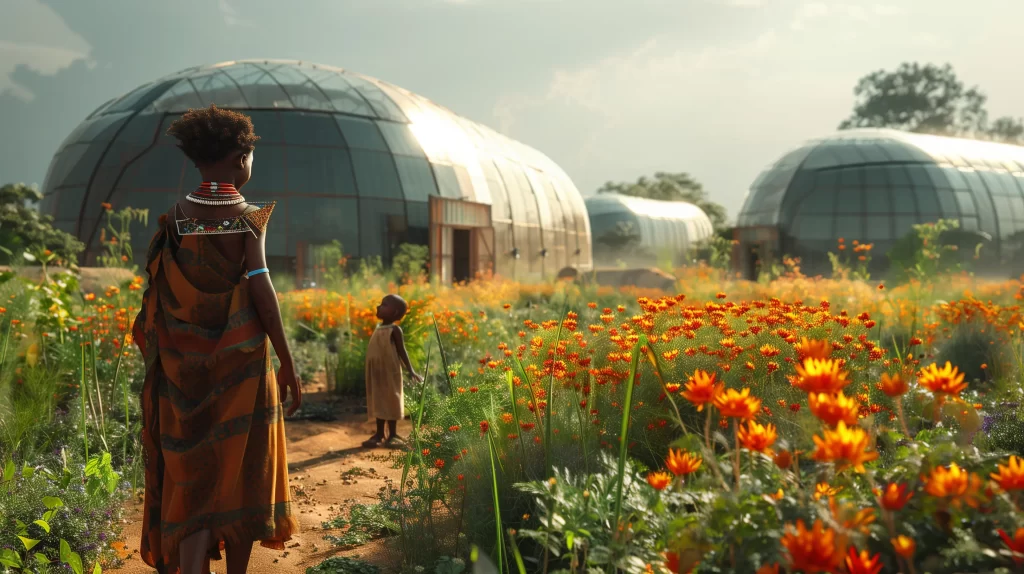
Changing the way energy systems worked had a great impact on the lives of billions.
Some regions moved past the traditional nation-state model and opted instead for a more bioregional-friendly model with participatory decision-making at its heart. Nazir had been afraid that this would lead to chaos, but it ended up helping many sustainable technologies flourish and bioregeneration to happen at a great scale, helping the newly ratified Natura Persona law to secure the rights of nature as a legal person. Meanwhile, other nations opted for a form of negotiated interdependence. Lastly, there were those countries from the Global North that had a hard time getting used to a new political order where they weren’t the ones setting the rules of the game.
Nazir had always found it inspiring how in Latin America, the Andean Bioregional Pact, had been able to prioritise a stronger connection to nature and its rhythms through sensor networks for biodiversity monitoring. They proved to the world that ecological and economic resilience were not opposing forces but rather mutually reinforcing. For the first time in modern history, the rhythms of nature and those of humankind had started to work as one at a large scale. The result of this process was the recognition of the Amazon jungle as a subject of rights and the first truly global technological exchange where the so-called developed nations transferred their technologies to local entities. He found it incredible that the idea had once been considered to be just an ideological experiment.

Bioregional governance sees no boundaries where traditional nation-states do.
A couple of years later, he ended up in the Amazon implementing its first energy storage system, an organic flow battery. To this day, it is still a controversial decision rejected by many environmentalists, although Nazir thinks this was necessary to have enabled the implementation of distributed acoustic and thermal sensor networks for monitoring nature. Also called biomonitoring systems, these sensors were IoT technology used to reach places that were hard to connect using conventional infrastructure, and they were very helpful in keeping track of endangered species in vast areas of land.
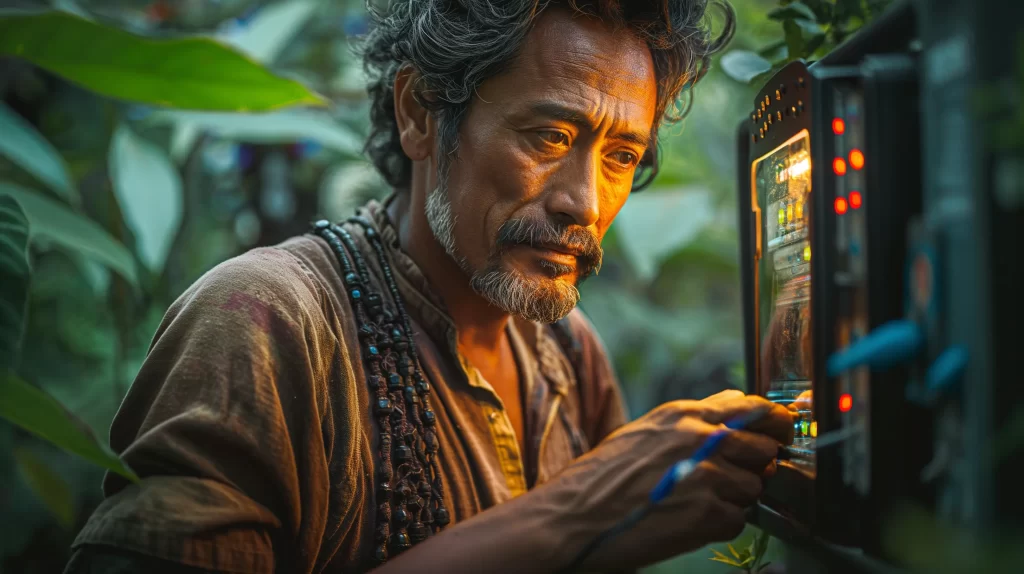
Nazir inspecting an organic flow battery installed in a remote bioregional community.
The implementation of the organic flow battery guaranteed long-duration energy storage, eliminating the need for constant maintenance, and at the same time triggered a profound technological shift and would later contribute to the development of the largest publicly-owned integrated water management network, a revolutionary technology that guaranteed the quality of the water people drank, integrating perfectly with waste-powered energy systems that helped produce energy from human faeces. Both were examples of mature technologies that had been under the radar for some time, mostly because of the cultural barriers that hindered their reach, and Nazir was proud he helped push them forward by directly reaching out to local leaders.
What began as isolated environmental monitoring efforts soon evolved into a revolutionary system for collaborative governance. Unlike previous top-down experiments, these networks were designed through participatory approaches where indigenous communities, local scientists, and global researchers co-created bio-technological sensing infrastructures. In the Congo basin, for instance, they allowed Indigenous communities to track deforestation in real-time, creating unprecedented environmental accountability. Unfortunately, at some point, problems started to arise.
In Asia, the ATC started questioning the use of data generated by the new monitoring networks. Who truly controlled these environmental systems? How could technological transparency be maintained while respecting local cultural contexts? These became ongoing negotiations rather than resolved issues. Nazir had his own ideas, but he chose to focus on his energy storage systems as the scientist he was.

Nazir acknowledges that data is a very powerful tool, but he is also aware that it can be easily misused.
Wherever he completed a project, things started to change for good, at least most of the time. To outsiders, change seemed to go very slow, but to local inhabitants, things were going at a fast pace. They saw how their well-being improved thanks to the possibility of storing energy in a way that they alone could manage, and this often came with the challenge of adapting local cultures to new ways of doing things. In most parts of Africa, for example, entire countries began to redefine what it meant to be “connected.” Suddenly, what was once referred to as the periphery was now a web of innovation centres, not only in terms of technology but also as to how culture can adapt without destroying ancestral values and traditions. Experts from Global North countries have, in recent times, travelled to the South to learn rather than teach as they did before.
Today, Nazir is a highly sought-after energy storage expert who can proudly claim to have helped avert the climate crisis from getting worse. He is also living proof that change is possible.
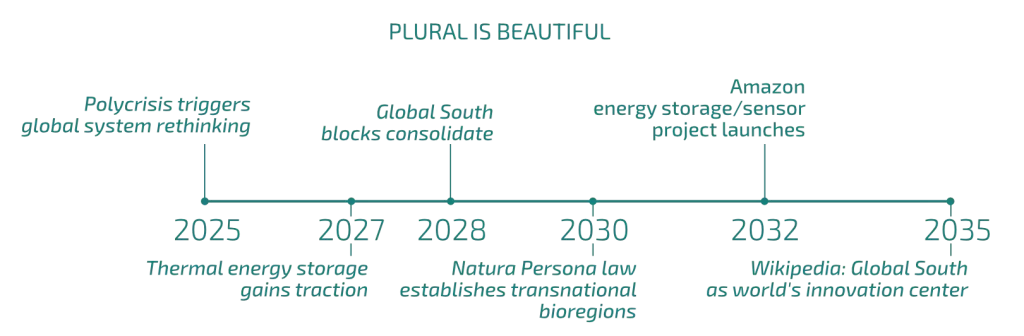
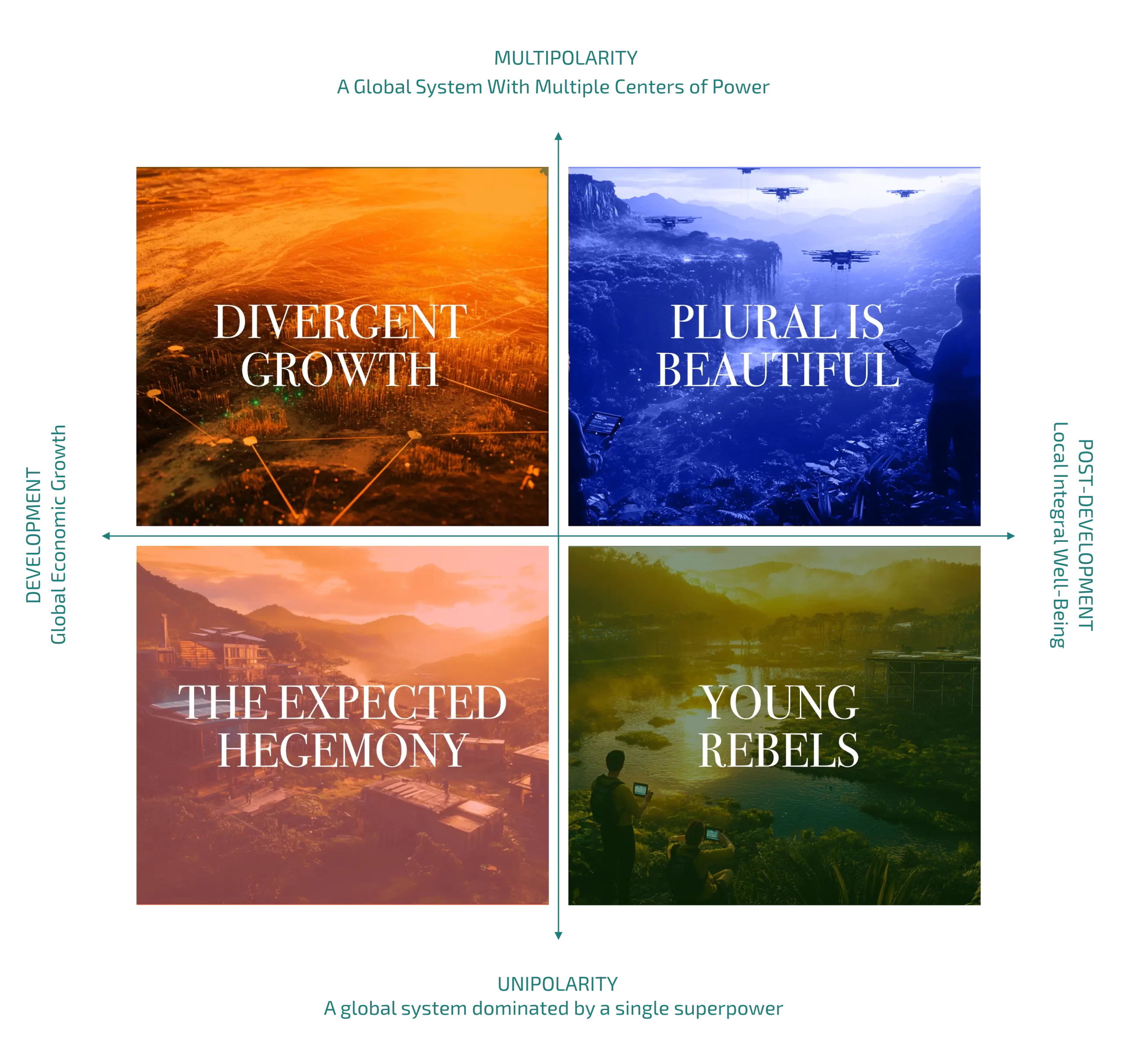
Plural is Beautiful timeline
Some people think that the integral approach to development couldn’t have been possible without the world entering an era of unipolar dominance. Historians might agree with them, given that no one 10 years ago, back in 2025 when the unipolar world took shape, thought it possible that a global wave of international collaboration would arise. But you know how the saying goes, diamonds are made under pressure. No one knows this better than renowned bioremediation activist Layla from the South, as she likes to call herself.
Layla was starting her life as a local activist when the world started to change very fast. Only 14 years old at the time, she was still naive enough to believe that one person could change the world, and we are all lucky that she did.
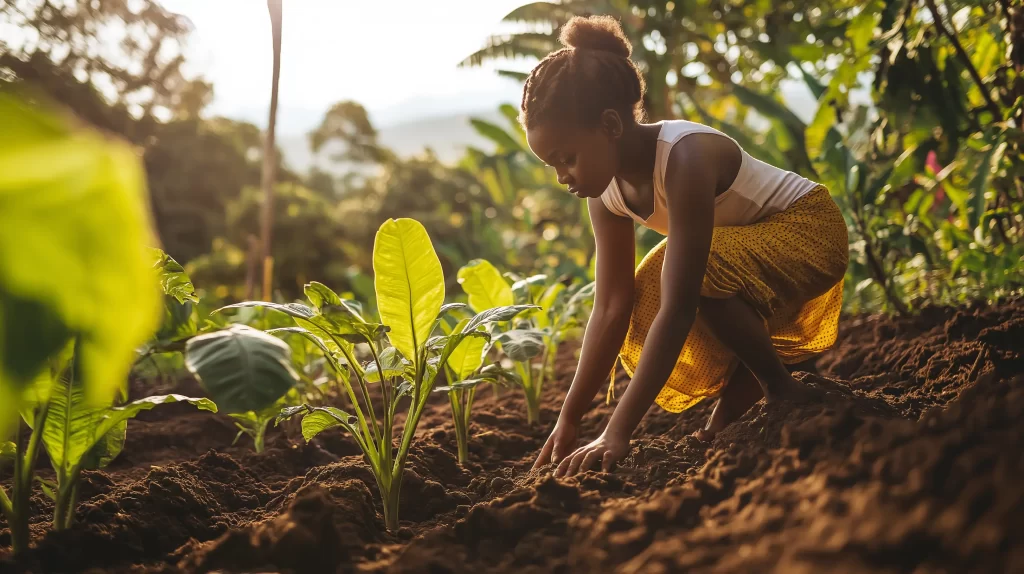
A young Layla, 10 years old. Since young she eagerly learnt about regenerative agriculture from an elder farmer.
The daughter of farmers, she had always been obsessed with nature. Thus, it came as no surprise to her family when she started learning about regenerative agriculture. When asked what she wanted to be when she grew up, she always answered that she wanted to be a bioregenerator to heal nature from the wounds inflicted by mankind. This would occasionally lead to her explaining that bioremediation uses microorganisms to help nature recover and that it could help damaged soils recover and much more. As crazy as it might sound, that was exactly what she ended up adopting as her life project.
To her, it didn’t matter that countries were starting to close their borders. She was determined to achieve her goal of healing nature. In her eyes, nature was one and knew no boundaries. Eventually, she went on to build decentralised communities on the Internet with other similarly-minded young misfits who found the global situation to be the perfect excuse to rebel against a system that they saw as unfair and a risk to the entire planet. The group included hackers, scientists, activists, and dreamers. They began weaving a transnational bioremediation network of resistance and reimagination.
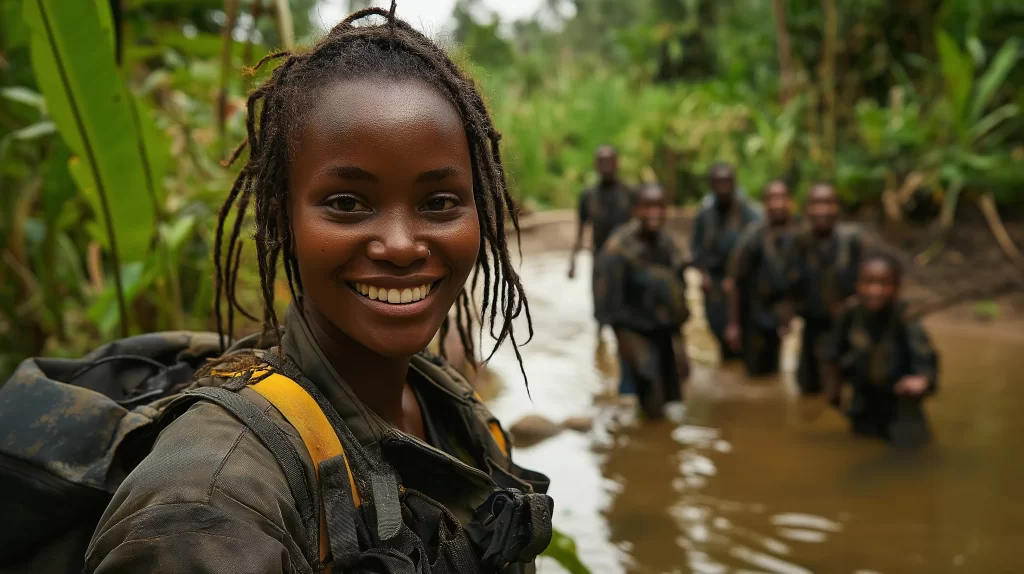
Layla in a restored rainforest, surrounded by her team celebrating their success.
Layla is considered by many to be the informal leader of the group, even though there wasn’t such a thing as centralised leadership. One of her greatest contributions was the DIY mycroremediation toolkits, a disruptive open-source technology that resulted from her years of experience with bioremediation. It made use of fungi to decompose dangerous hydrocarbons. The kits allowed people anywhere in the world to help nature recover from decades of extractive activity. Using different types of microorganisms found in most places, the kits could be easily adapted to local environmental conditions and societal needs.
A crucial decision regarding the kits, that Layla agreed with, was suggested by an international cooperation agency: the kits should be open-source. This meant that people from all over the world would be able to modify them. The decision gave way to the creation of a microorganism barter market where people used community credits and local expertise as a form of currency. In turn, this helped those who were less experienced reap the benefits of what others before them had done. Suddenly, once polluted environments like water and soil systems started recovering, something that not even the most optimistic environmentalists would have expected.
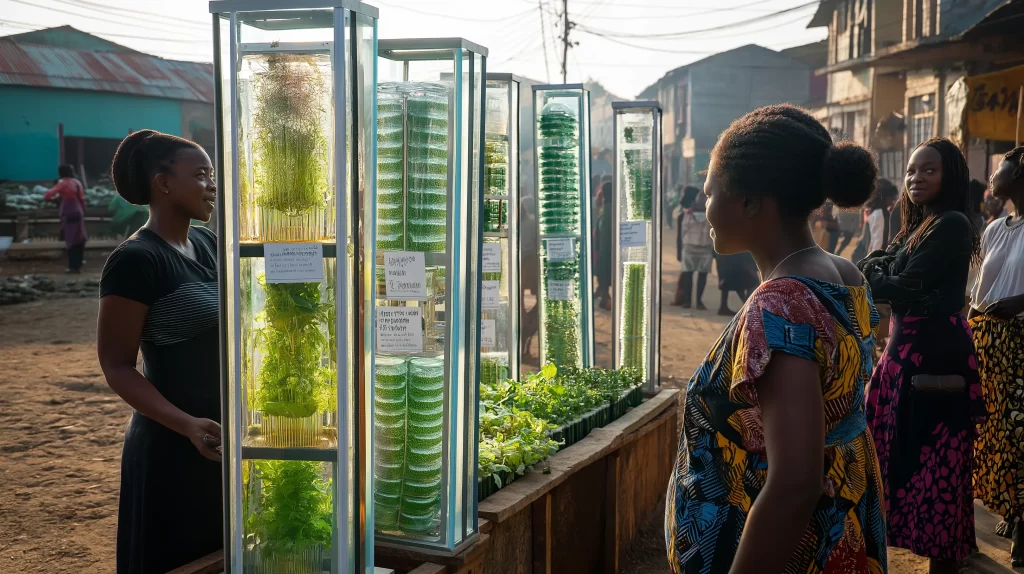
A barter market for microorganisms, where environmentalists and farmers exchange bioremediation fungi, data, and expertise instead of money.
The impact was even greater when a group of white-hat hackers from the North modified existing surveillance IoT sensors to monitor local environmental conditions and rewild agonising agricultural fields. They started using artificial biosensors due to their ease of implementation of a circularity-by-design approach and their accessibility. They even built an integrated water management network that was able to detect epidemic outbreaks before they escalated through a constant analysis of pathogens in water. Layla and others from the community were wary at the beginning, especially since they had grown up listening to stories about how the Northern countries only took advantage of those from the South. However, they collectively decided to give their ideas a go.
In cities like São Paulo, Buenos Aires, and Johannesburg, underground networks of young technologists created local environmental monitoring platforms that turned corporate surveillance technologies into tools of community empowerment. These platforms were more than just data collection systems. They became living, breathing repositories of ecological knowledge, allowing communities to track environmental changes with unprecedented precision. The newly available data became a powerful driver of social value and aided the creation of digital cooperatives to manage the data, and more importantly, address climate emergencies. This wouldn’t have been possible without the easiness with which regulatory governmental systems could be bypassed, something that raised the alarms of environmental and data agencies alike.

A global network of young activists collaborating online through encrypted communication channels.
To address this, Layla and the community of bioregenerators started creating informal legal systems to guide their actions. They thought that this would help ease concerns on behalf of regulators and give more transparency and legitimacy to their cause. That wasn’t the case and, as a matter of fact, the situation only got worse. Governments began scrutinising their work and imprisoning activists under the claims of doing business without contempt for the law. In some places, artificial biosensors started creating problems because of erroneous disposal methods. Despite all the difficulties, communities were able to participate directly in decision-making processes that concerned them. The global network of young rebels used encrypted communication platforms, blockchain technologies, and distributed research networks to share knowledge and maintain control over their data. This helped improve democratic participation for things as critical as planting only seasonal crops, something that had previously been very hard through the use of traditional state mechanisms.

A protest turns violent as activists defending their open-source biosensors are confronted by riot police.
However, the whole situation created the perfect opportunity for private companies from the North. Biotechnology revealed the most stark manifestations of global inequality. High-end regenerative technologies developed in the Global North were suddenly exported to the Global South under expensive licensing agreements, creating new forms of technological colonialism. However, biotech researchers who disagreed with this approach began developing strategies of technological resistance. Underground laboratories emerged, where open-source biotechnological research challenged corporate monopolies. A breakthrough came when they developed a low-cost bioremediation technique that could treat contaminated water systems to remove heavy metals, directly challenging the expensive solutions offered by northern corporations. Because of the type of algae being used, this ended up motivating the North to create sophisticated algal photobioreactors that could produce biofuels. A whole set of innovations came after. Unexpectedly, Layla saw how competition between the North and South kept innovation going.
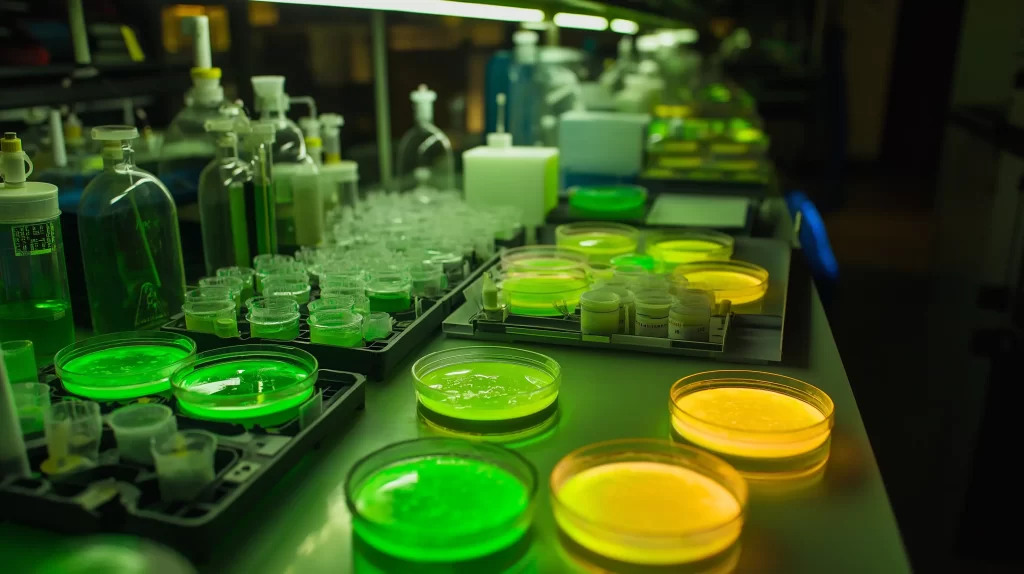
An underground biotech lab where activists and rogue scientists are testing innovative, open-source bioremediation techniques.
While the bioremediation situation escalated, Layla was invited to share her experience with a group of young rebels working in sustainable energy. They had been inspired by her and wanted her to be an advisor to their cause. She thought this would help her find the space she needed to distance herself from the growing tensions with rich and powerful corporations that wanted to patent the bioremediation microorganisms for their personal benefit.
Layla knew little about sustainable energy, but she had a lot to share in terms of how to grow a network around a common social goal. She was told that, as for biotech, sustainable energy had become a battleground of ideological and technological conflict. The world split into two camps: those embracing renewable technologies and those clinging to fossil fuel paradigms.
In this polarised landscape, young rebel innovators created decentralised energy networks that operated outside traditional infrastructure. Thanks to the use of underhyped technologies like organic flow batteries, communities were able to easily store electricity in the form of chemical energy. Although the technology was not able to scale at an industrial level, it found a niche at a more local scale, helping assemble more locally based supply chains, just as Layla had suggested. Local community microgrids emerged in unexpected locations – informal settlements, rural villages, and abandoned industrial zones – becoming autonomous zones of energy sovereignty.
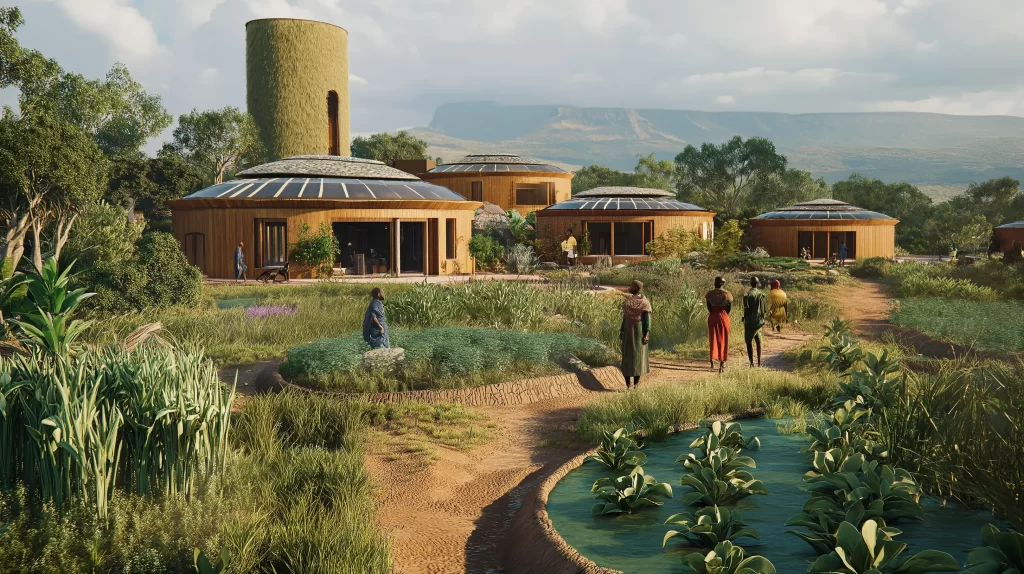
Young rebels establishing the first energy-independent eco-settlement in Africa. Photobioreactors, thermal energy storage, and organic flow batteries blend seamlessly into the environment.
By 2035, the movement Layla had helped create achieved something unprecedented: a transnational infrastructure of technological solidarity that operated beyond traditional geopolitical boundaries. The young rebels hadn't just resisted the dominant technological paradigm; they had begun to create alternative models of technological innovation and social organisation.
The dominant global power found itself increasingly challenged. Its carefully constructed systems of technological control were being dismantled not through violent revolution, but through creative reimagination to help nature heal. Technology became a platform for collective recovery, ecological regeneration, and social transformation.
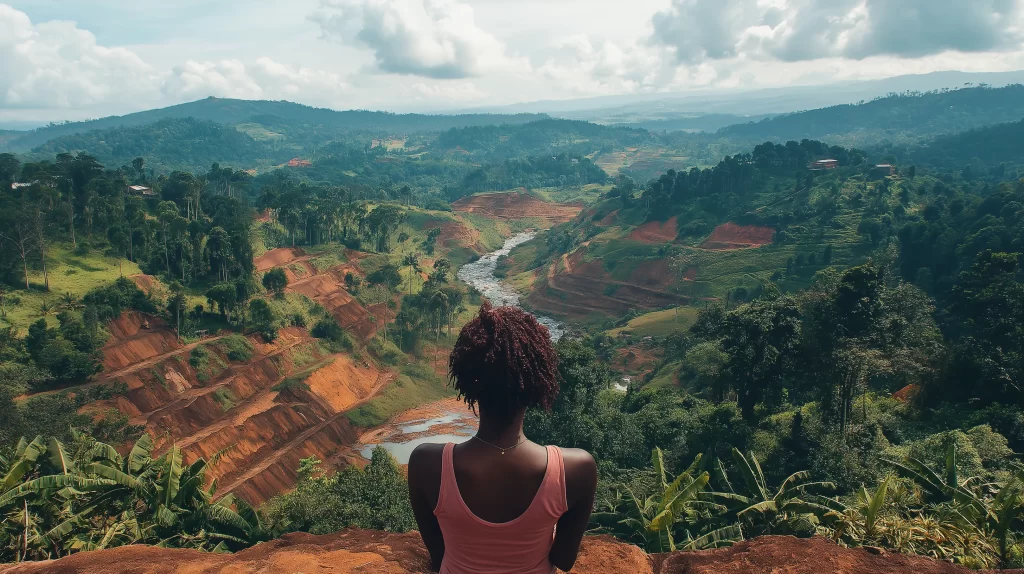
Layla admiring a bioregenerated old open-sky mine, where forests have returned, rivers run clean, and sustainable communities thrive.
This was more than a technological revolution. It was a reimagining of what was possible when young people from around the world decided to take their future into their own hands. To the disbelief of many, it had been possible thanks to a young woman from the South.
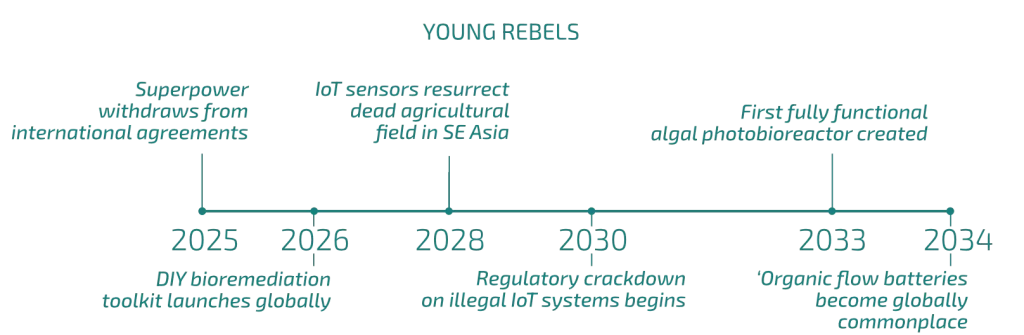
Young Rebels timeline
It was just a matter of time before the world entered a competitive frenzy over the best and strongest trade agreements. As far as George could remember, he had never seen in all his years as a politician such strong divisions take hold of society. It was 2035, but in many aspects, it felt like the Dark Ages. The world had become a dog-eat-dog supermarket where everyone was trying to get the best deal.
George was old enough to remember that what was once referred to as the Global North and South by mostly “woke” groups were now the standard terms when doing business. The North sold to the multiple blocks making up the South, setting the price and the conditions in an expanded form of economic dominance. Like his own country, others from the advanced North were the ones who developed all things high-tech, which were then sold to those from the South at exorbitant prices and under very restrictive licenses. And what were the latter to do but to accept this de facto order? At least that was George usually told himself to avoid the guilt.

George was conventional in many ways, and yet, his ideas around development seemed crazy to others.
As harsh as it sounded, he had been able to experience first-hand how southern people’s lives could be improved under competitive conditions. As an appointee to the government business and commerce unit, he particularly remembered a bioregeneration project in northern Africa where local people had been able to heal the soil after decades of mining. This was great, as it allowed biotech companies to sell the locals even more bioremediation products to keep the soil fertile. Money aside, he still remembers how he was struck by the way people in the area seemed to organise themselves despite adversity, or thanks to it, as he would later come to think. Their ability to govern themselves using a decentralised management system helped them balance power, preventing extreme local monopolies. Secretly, he wished his government could be able to do such things, but he was afraid to openly talk about it.
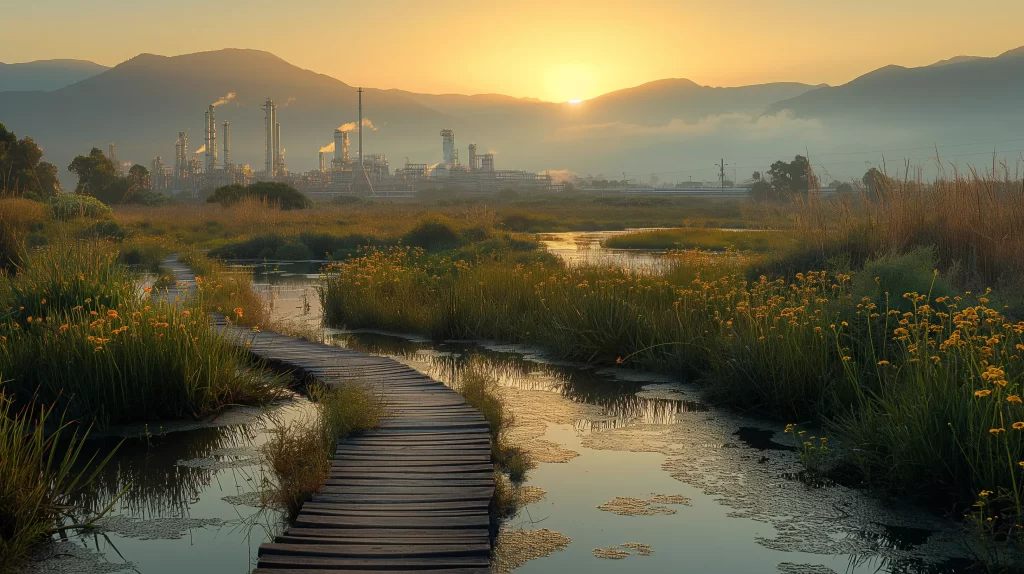
A vast mining site transformed into a beautiful bioremediation project. The soil is rich with regrown vegetation, but in the distance, massive biotech corporations produce patented soil restoration products.
As a politician, some of the most important pieces of legislation he had passed were those related to the biotechnology industry. He was proud of them, and had seen the industry grow from its modest beginnings of many startups to a ridiculously profitable business made up of a few large corporations. Biotechnology became a critical domain of strategic innovation, and George was its main preacher. Northern countries developed proprietary approaches to genetic engineering and biological solutions like bioremediation microorganisms. A South American biotech branch from a global conglomerate used Northern patents to create drought-resistant bacteria that could transform agricultural productivity in challenging climates. This created a lot of jobs in the region, and most importantly, it helped increase food production despite the ever-deteriorating climate conditions.

Biotechnology is a major driver of every possible industry. The more biotech a country has, the wealthier it is.
Meanwhile, the Southeast Asian Research Alliances, financed by northern loans, developed breakthrough algal photobioreactors. This technology was able to capture CO2 and generate biofuel, all just a license away. Even more impressive, these bioreactors helped guarantee nutritional security in many parts of the world by producing proteins, vitamins, and essential acids that had been for a long time very hard to obtain due to eroded soils. George wanted to hire some of the local scientists working on the project, but his country’s immigration laws had become tougher. He thought it was a shame, but at the same time, he found it fascinating to see how their hard conditions made innovating a necessity. He was even open to admitting that the locals had become self-reliant in many aspects and constantly wondered if scientists from the South would accept his relocation offer. They had a sense of pride.
More often than not, people from the South were distrustful of those from the North, and in George’s opinion, this was sort of justified. The North had long advocated for the implementation of sensors and IoT technologies in the South in exchange for certain proprietary technologies. Everyone knew these had become the primary tools of geopolitical strategy, transforming how nations understood and controlled their territories and resources. In many regions of the South, locals protested for less intervention and more autonomy from the Orwellian monitoring sensors of the North.

A massive protest in a Latin American city against Northern-controlled IoT monitoring systems.
The first large block-data sensor networks were formed with commercial relations and national interests at the front. During the last ten years, however, countries from the South had become importers of sensors and devices only as long as they were willing to share their data with their respective private-sector IoT tech providers. For all the benefits this brought his country, George was against such practices since he believed that in the long term, they only created resentment among local communities. Whenever he could, he supported this same technology being used for other more benign purposes.

Political interventionism can occur in different forms. Sensor networks are just one of them.
He was among the few politicians who voted in favour of each power bloc developing its sophisticated technological architectures. He knew it was possible. Many African countries had been able to implement continent-wide decentralised environmental monitoring systems using distributed sensor networks that could track everything from soil moisture to atmospheric carbon in real-time. These networks became so advanced that, with the help of AI, they could predict agricultural yields, water stress, and potential environmental conflicts with unprecedented accuracy. Most importantly, using these sensors granted local communities the ability to self-determine critical aspects of their governance.
The Asian technological corridor developed hyper-localised sensor grids that integrated urban infrastructure with environmental monitoring. Smart cities became living laboratories, where every piece of infrastructure – from water pipes to electrical grids – was a node in a massive, interconnected sensing ecosystem. These systems went beyond mere data collection, implementing predictive maintenance and resource allocation algorithms that could reshape urban landscapes in a very short time. George knew that, in the long term, the South would end up becoming more sustainable thanks to the way they had been able to use these systems. Meanwhile, countries like his saw it as a matter of competition and control, rather than cooperation.
The place where cooperation is still widely accepted throughout the world is in the energy sector. The past decade saw an unexpected rise in sustainable energies. Some years ago, intensified competition sent the price of oil and other fossil fuels surging, which made countries more open to exploring renewable energy generation as a viable alternative. The tipping point came with the improvement of clean energy storage technologies. These were able to redraw the energy map, something that not even the most optimistic energy experts expected.
To George’s surprise, the world now faces a paradox where the increased supply of renewable energy has led to more growth, or what researchers call Jevons paradox. In turn, this has led to an existential threat that risks a point of no return. That is why commercial blocks are already starting to discuss a global treaty to ratify laws that prevent increased productivity from trespassing the limits of nature. George is all in with this project and has seen from his visits to Scandinavian countries that it can actually work.

Growth cannot be stopped. A sense of emptiness and senselessness haunts the hearts of many.
Not surprisingly, however, sustainable energy technologies have become weapons of mass economic competition. In the Middle East, breakthrough solar storage technologies completely revolutionised energy generation, making it the world’s largest energy hub and the provider of half of the energy consumed in Europe. Huge energy storage systems with unprecedented efficiency were built. This has been in part due to the implementation of organic flow batteries and Thermal Energy Storage devices.
Being an experienced politician, George is constantly interviewed by reporters. In one interview, he was asked what his assessment of the global geopolitical situation was. George answered: “The world's technological landscape has become an intricate mosaic of competing innovation zones. IoT sensor networks map every conceivable environmental and economic metric in the South. Meanwhile, biotechnological innovations are reshaping human capabilities thanks to the accelerated pace of Northern science. Lastly, it is starting to become the norm to see that sustainable energy technologies are the new measure of national power.”

Power looks pretty much the same even though everything has changed.
Despite all the progress being made and all the development milestones achieved, George considers that technological proliferation has come with profound challenges. The Global South has found itself caught in a complex web of technological dependencies. Each breakthrough comes with strings attached – proprietary technologies, complex licensing agreements, and strategic limitations. The promise of technological democratisation has given way to a new form of technological colonialism, where innovation has become a tool of economic and political control.
In this fractured world, George clearly understands that technology is not just a tool for good. It is a battlefield of competing visions of human potential, and he will compete for his country’s vision, even if he sometimes disagrees with it.
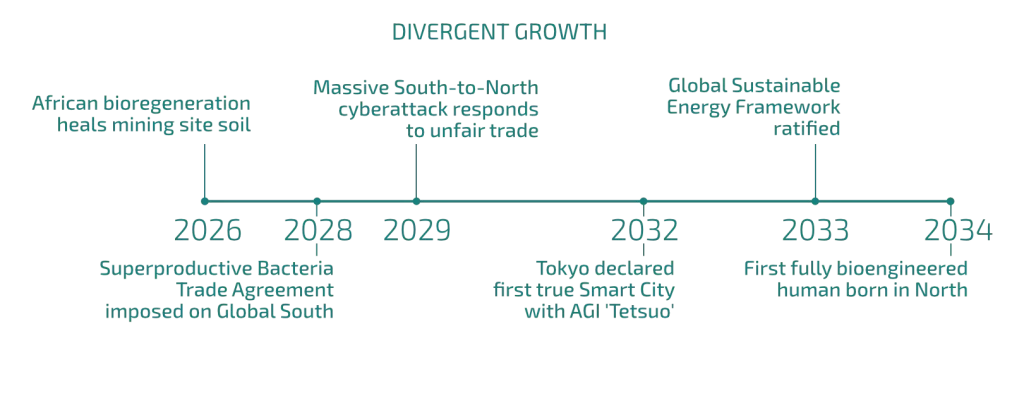
Divergent Growth timeline
Jane wasn’t sure what to think about the new year. Her horoscope said that things were going to be great in 2035, but the reality was that conditions were getting tougher in every possible way. In the past years, she had experienced the pressure of living in a unipolar world. Based in a developing country in Asia, she had seen armed conflicts increase throughout the region, and with that the migration that came with people looking for better opportunities.
Extractivism had reached new levels as a consequence of a tough unilateral international development policy. Obeying a singular vision of how technology should be deployed to serve the interests of economic modernisation instead of those of the people, mining had seen a sharp increase. And this wasn’t just the case of her continent. Since the systemic collapse of the 20s, the global dominant power had been able to impose its homogeneous vision in the entire developing world.

Working as a miner all her life isn’t exactly what Jane wants. For the moment, it pays the bills.
To sustain its growing empire, the dominant power needed a lot of rare earth metals. Jane herself has worked as a miner. She remembered how the industry had changed with the years. At the beginning of her career, mines operated with huge fossil-fuel-based generators. They sent huge amounts of smog into the air, making people in the surroundings sick. Children and young women faced the worst consequences, as they were the ones who usually stayed at home unprotected. She was one of the few women who had a job, and she was thankful for it.
Instead of a just transition to renewables like the one everyone dreamt of, traditional energy infrastructure in her country received massive investments from private companies. Sustainable energy initiatives were implemented as standardised solutions, often disconnected from local realities. Large-scale renewable energy projects became markers of modernisation, with success measured purely in economic terms. At the same time, peak oil production reinforced existing energy paradigms, with massive fossil fuel extraction projects financed through complex international agreements.
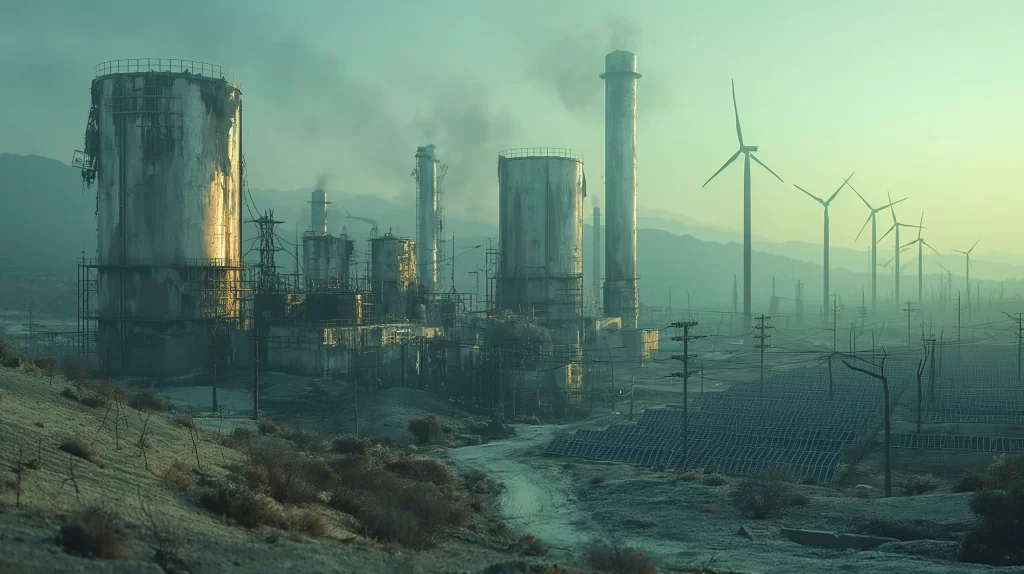
In certain parts of the world, renewable energy is just another form of exploiting the planet.
Still, some renewable energies were introduced. Not all was good though. Jane considered that the infrastructure deployed was very invasive, and the beautiful landscapes of her home had been replaced with a somewhat gloomy sight of a machine-like scenery. The sight she detested the most was that of the energy storage systems. These huge devices operated on what engineers referred to as organic flow batteries and Thermal Energy Storage units, in her opinion just fancy names for big and ugly batteries. They were supposed to be a marvel of modern engineering, but to her, they were nothing more than large metal blocks that served the interests of a foreign oppressor. With the strict top-down control methods in place, there was little her people could do to complain about it.
Jane sadly remembered how the situation had become tougher with the implementation of sensor networks and IoT technologies. They had been rapidly implemented with the promise of economic integration and the possibility of better local governance, but in practice, they had only delivered technological dependency and a tight grip on the population.

Wearables are the ultimate efficiency tool for humans. Data does not sleep.
The centralised logic of the IoT networks and their ownership of the data helped increase efficiency by a lot at the expense of the collective well-being. These technologies went far beyond traditional monitoring, developing predictive systems that could anticipate social movements, economic shifts, and potential points of resistance. Because many of these sensors were mandatory wearables, scientists built them in a way that produced their energy, hence why they were called energy harvesters. They were very hard to get rid of.
As she connected with other people in the region because of her job, Jane learned that the same had been going on everywhere else. Every region became a node in a vast, interconnected economic system, with technology serving as both a tool of integration and control. The entire population of the Global South found itself mapped, categorised, and disciplined by sophisticated technological systems. Sensor networks tracked migration patterns, resource movements, and potential conflict zones with terrifying precision. Data became the new currency, with global technological platforms extracting value from even the most remote communities.
This contrasted sharply with what she had heard about the same systems and how they operated in the North. The same IoT networks were used as an integrated water management platform. This struck her as surprising, especially since her people constantly suffered numerous diseases due to the poor quality of the water they drank. She dreamed about this technology being used for good, for things like building networks to protect nature rather than social control. Unfortunately, there was no way she could suggest this. Democracy wasn’t a thing that people had access to.
As bad as all of this sounds, Jane couldn’t forget the fact that the worst thing that had happened was the implementation of biotechnology. Biotechnology developments followed a similar pattern of centralised control. Innovations were driven by corporate research centres, with little regard for local ecological contexts or indigenous knowledge. The first "Big Biotech" companies consolidated unprecedented levels of economic and political influence throughout the world. Patented technologies transformed agricultural and medical landscapes, creating new forms of technological colonialism that reshaped local economies and social structures. Jane and her people had experienced how their traditional cuisine had shifted towards a generic diet based on staples.

The biotech industrial complex is too big to fail.
Governments began serious discussions about regulating these biotech giants, but the corporations had already become more powerful than many nation-states. Breakthrough technologies in genetic engineering, crop production, and medical treatments were developed behind closed doors, with little public accountability. The most advanced biotechnological innovations became closely guarded corporate secrets, deepening the technological imperialist regime. There was little locals could do, and Jane found the sense of her people losing their political autonomy to be humiliating. Things got even worse when the faeces monitoring system was implemented with the excuse of generating energy from human waste, and although it was indeed effective, it was also a way to keep tight biopolitical control of people’s lives by overseeing and restricting what they consumed.
This was a somewhat generalised feeling in many parts of the Global South. Communities found themselves caught between the promise of technological progress and the reality of continued economic marginalisation. Extractivist practices intensified, stripping resources from the most vulnerable regions with unprecedented aggression. Armed conflicts kept on growing along ecological and economic fault lines, while illegal migration transformed entire continents into zones of perpetual displacement.
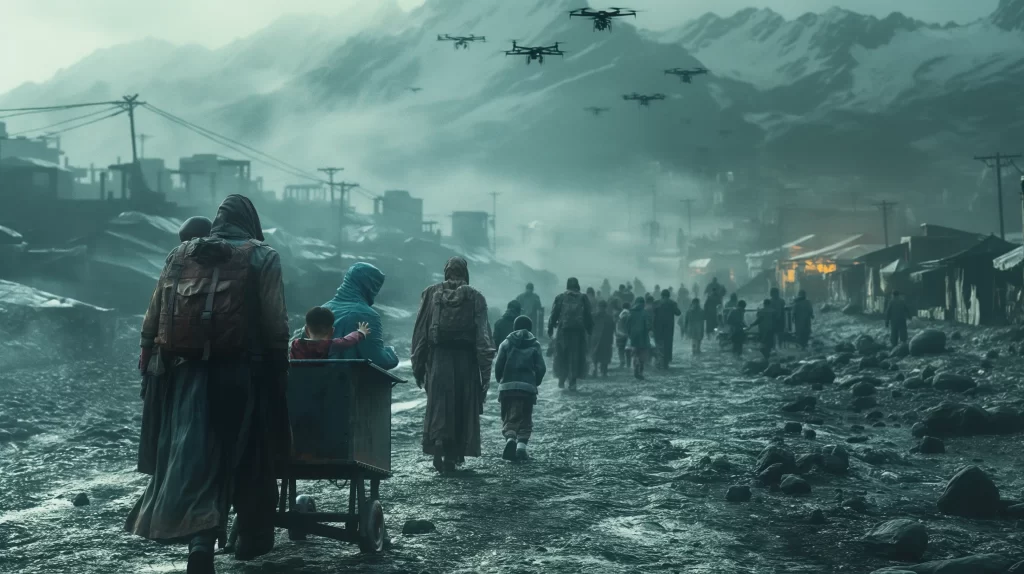
Masses migrate looking for better opportunities.
Jane sees with great sadness how the world has been redesigned according to a singular technological vision. While unprecedented levels of economic integration have been achieved and jobs have been created in the process, the cost was a profound loss of technological and cultural diversity. The dream of global development had been realised but at the expense of local autonomy and genuine innovation.
She found it sometimes hard to believe that what had begun as tools of human advancement had become instruments of planetary management, sorting and controlling populations with unprecedented precision. Technology was no longer a tool of human liberation, but a sophisticated mechanism of global control.

A thin line divides human flourishing and human control.
The most vulnerable continued to bear the heaviest burden, their lives increasingly determined by systems they neither understood nor controlled. To Jane, and billions like her, the promise of technological progress had become a nightmare of systemic control, a testament to the brutal logic of a world reshaped by a single, uncompromising vision of development.
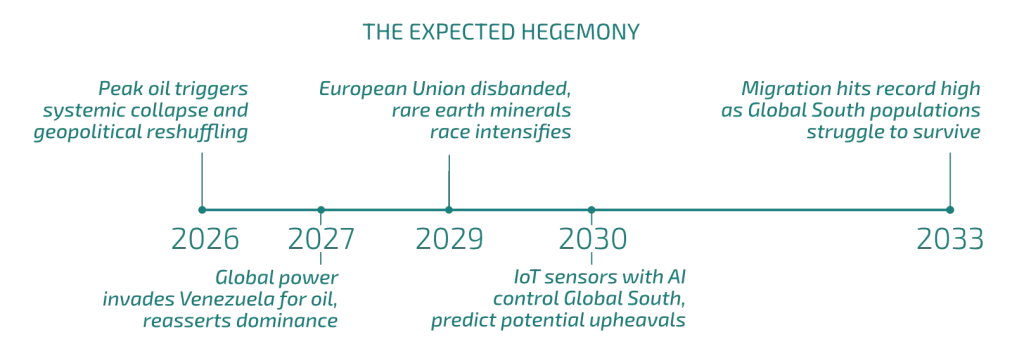
Expected Hegemony timeline