





A three-hour Pluriversal Interspecies Council at the Participatory Design Conference 2026, in Milan: designers, researchers and practitioners embodied rivers, migrants, corporations and ancestors to examine the promises of sustainable development — and to draft principles of coexistence instead of new targets.
Context
Participatory Design Conference 2026 · Workshop
Year
2026 · Milan, Italy
Services
Participatory design · Collective-intelligence facilitation · Strategic foresight
With less than four years to 2030, many SDG targets are off-track. But the deeper trouble is not the timeline: the goals carry a development logic that makes progress measurable, universal and human-only. What becomes invisible when development is the only horizon?
A three-hour council, time-boxed as a civic assembly. Participants stop speaking as experts and speak from a role — a river, a school, an extractive corporation, the ancestors — mapping harm and care across five 2050 promises of sustainable development, with a talking piece and rotating tables.
Twenty roles across five families, five scenarios examined from every perspective, seven principles of coexistence and a collective Council Statement — plus a micro-assembly kit built to be replicated.
Each participant received a card and a perspective to inhabit. Not a topic to discuss — a position to speak from, with its own needs, vulnerabilities, dependencies and guiding questions.
River, forest, mountain, pollinators, atmosphere. Their health depends on ecological relationships no human boundary contains. What memories do you carry? What is disrupting your cycles?
Migrants, informal workers, Indigenous community, youth, elders. What forms of work remain invisible? What does it mean to belong?
Local government, extractive corporation, urban planner, schools, infrastructure systems. How do you decide when different forms of life have conflicting needs? Who is affected by your decisions, but absent from the table?
Air, fires, waste, borders — presences that make hidden externalities visible. How do borders fail to contain you? What does a society reveal by what it discards?
Future generations, ancestors, species not yet existing, sacrificed territories, future technologies. Who can speak for those who do not yet exist? What wounds remain?
One role per table did not argue. It kept the record of the previous round and threaded it into the next, so the conversation accumulated memory instead of starting over.
Roles rotated across tables for five rounds. Each participant carried the same perspective into every scenario — and watched it collide with a different future.
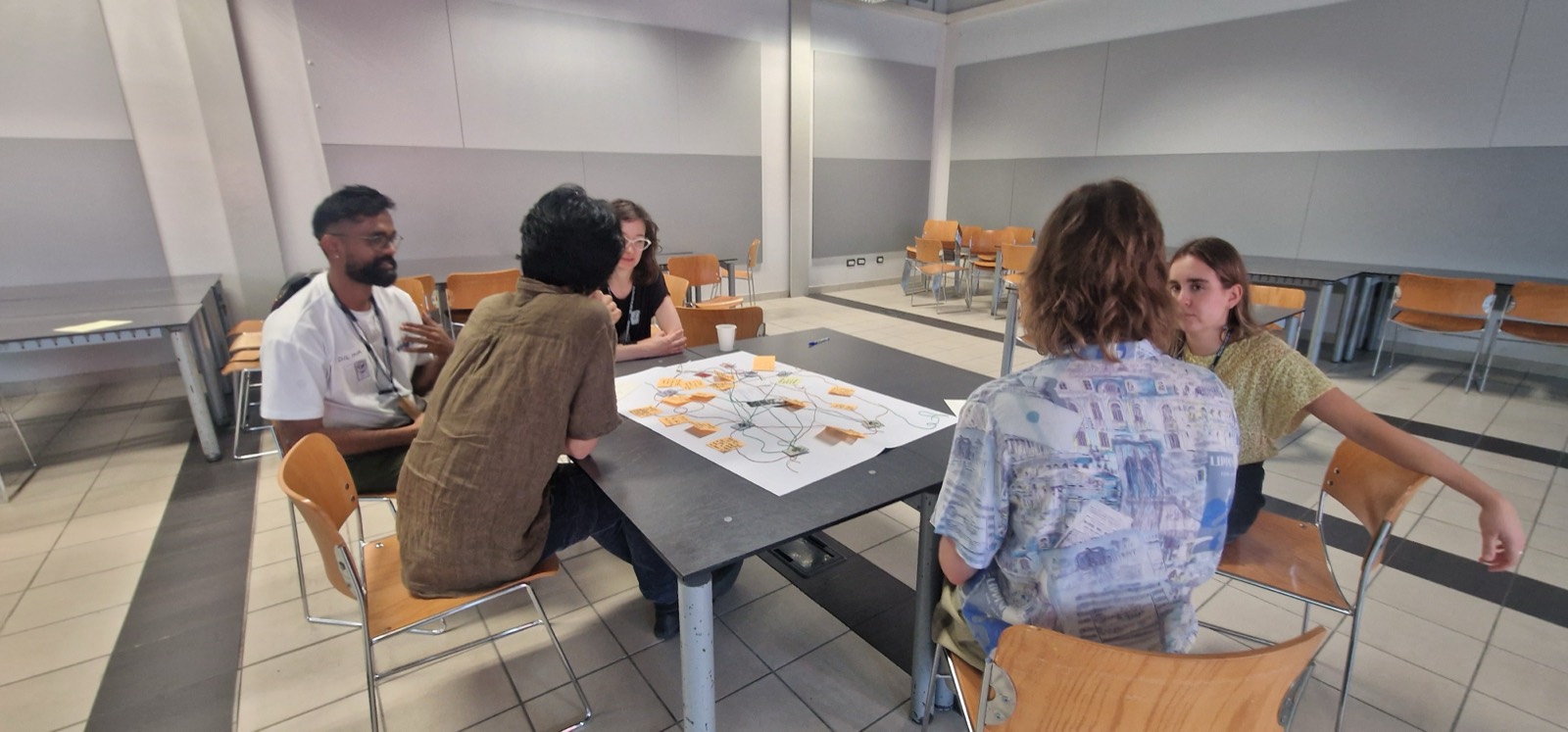
A Harm and Care map traced with threads: red for harms and sacrifices, yellow for unresolved tensions, green for care and regenerative practices.
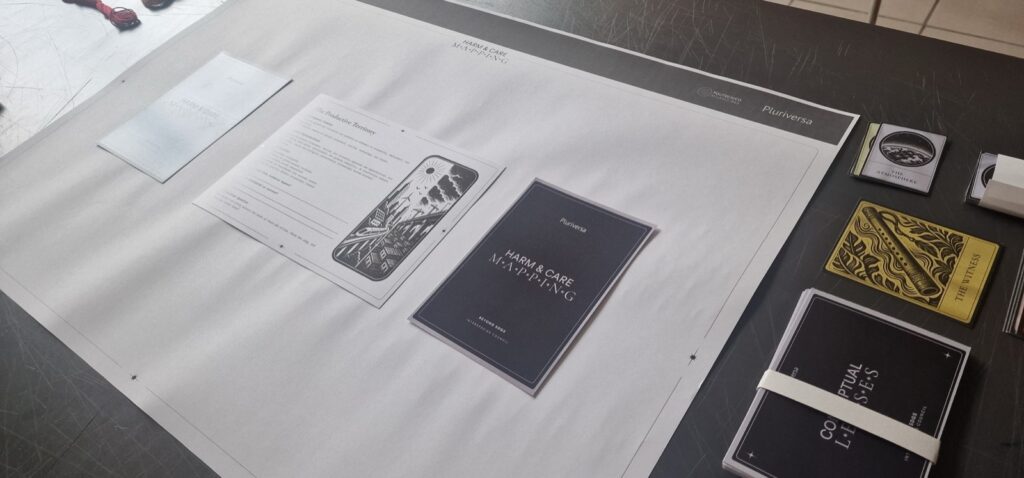
The decks before the first round: role cards, conceptual lenses and the Harm and Care map.
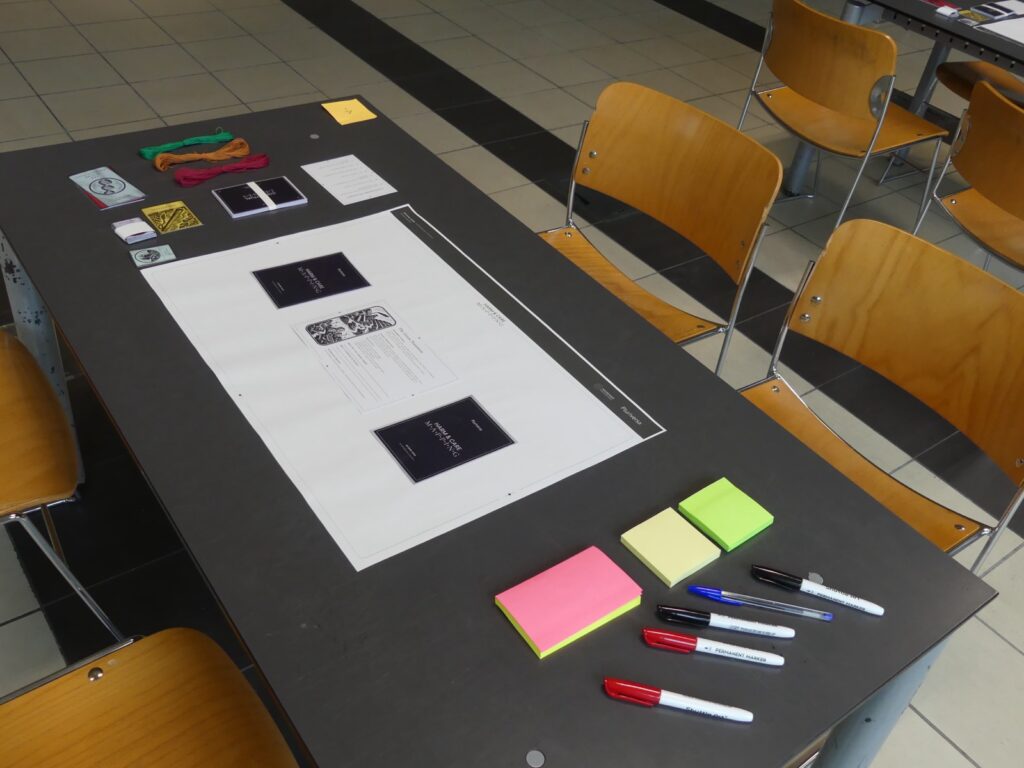
Each table received one scenario, one map and a full deck.
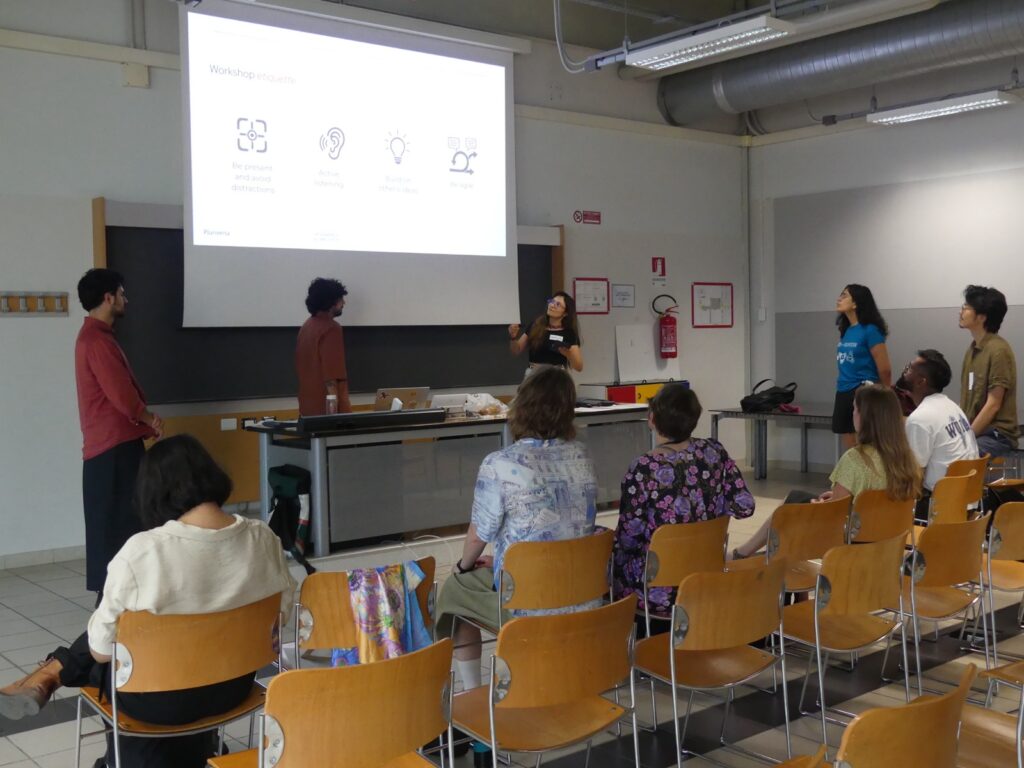
Opening the council: three hours, time-boxed as a civic assembly.
Each card carries a role’s needs, vulnerabilities, dependencies and guiding questions. The engraving and the colour tell you which family you belong to before you read a word.
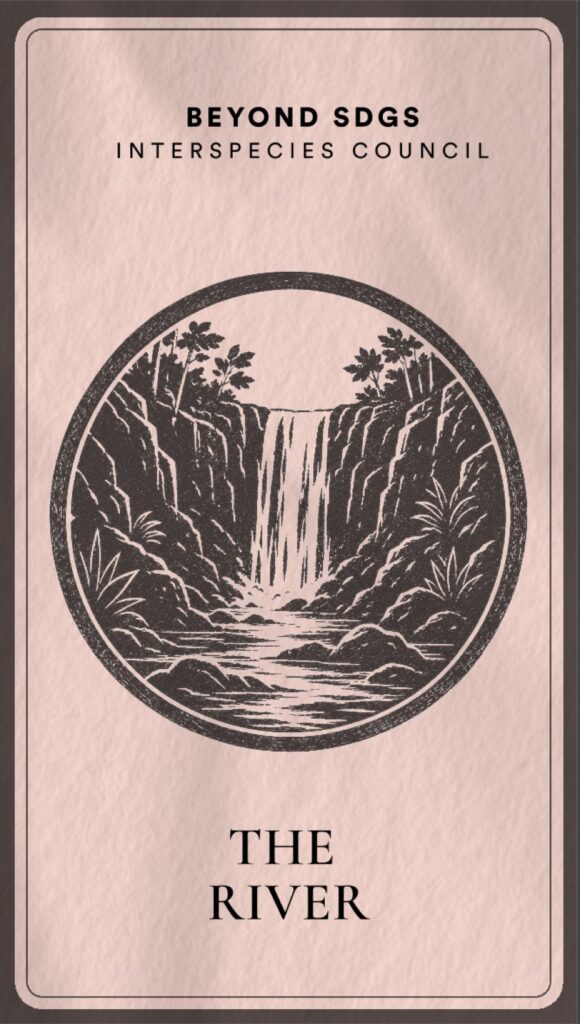
The River · more than human
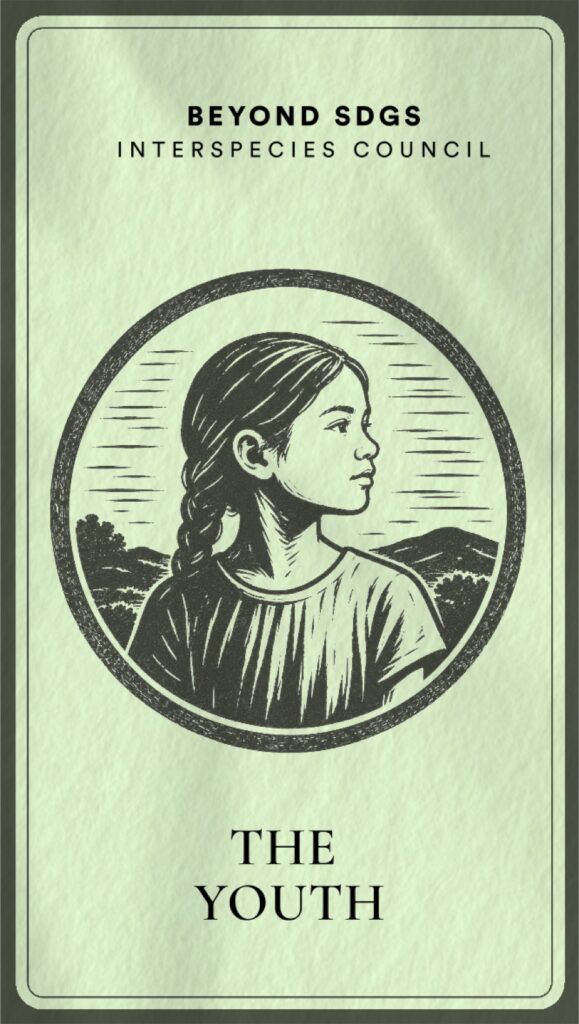
The Youth · human communities
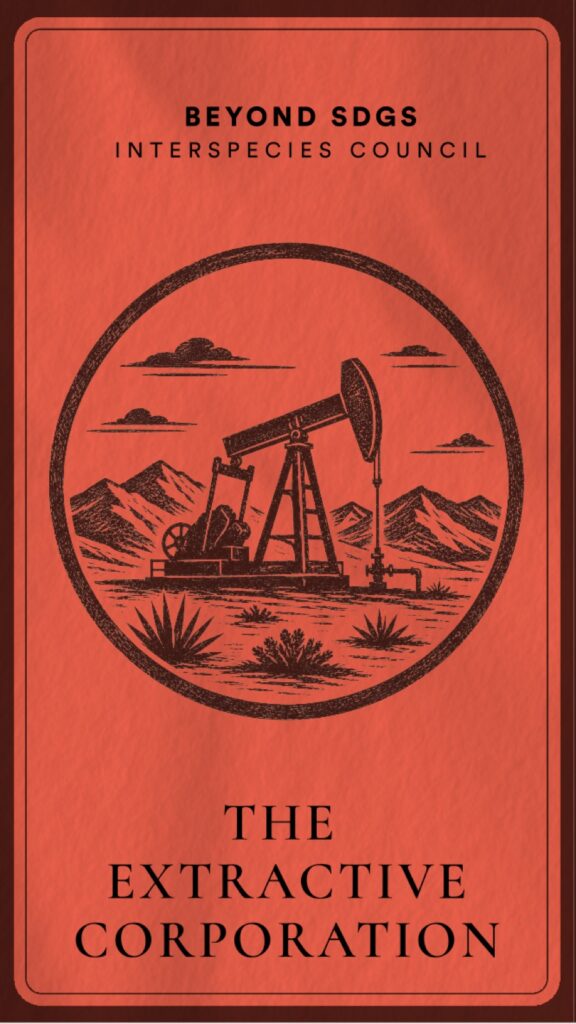
The Extractive Corporation · institutions
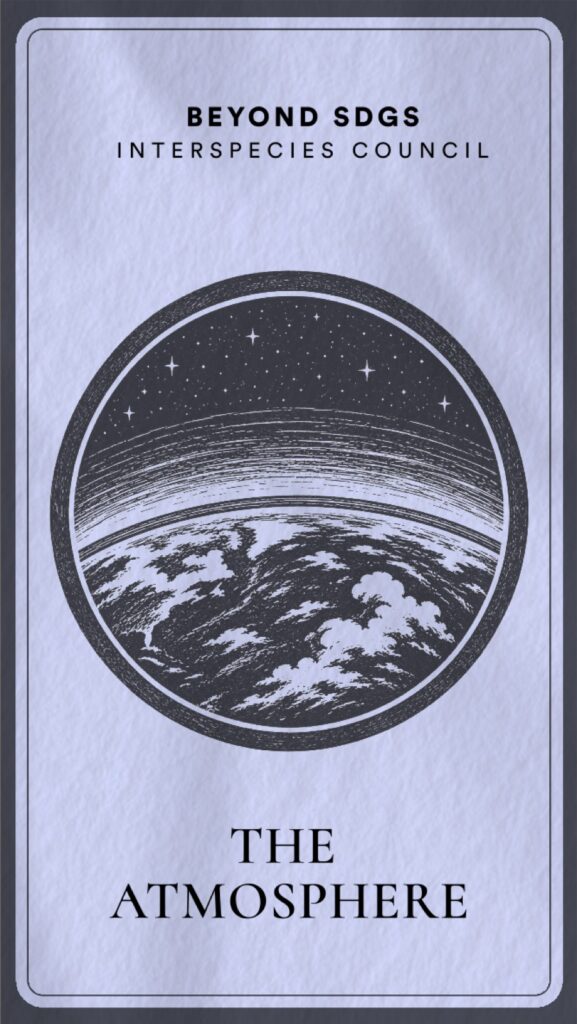
The Atmosphere · liminal entities
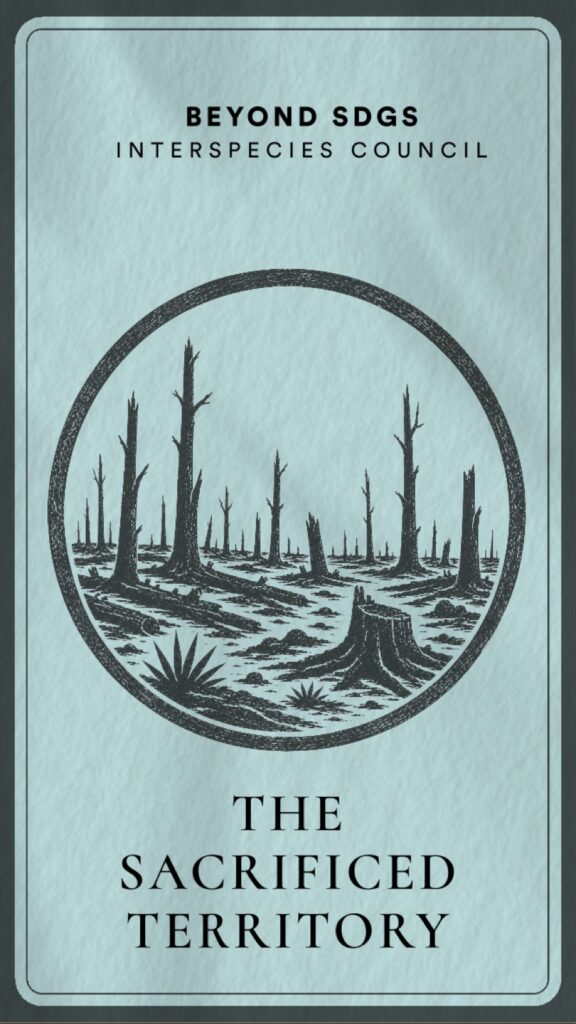
The Sacrificed Territory · future & absent
«Do not think “What do we want?” — but rather “What does the network of coexistence need?”»
The Council Protocol
Objective one · Decentering the human
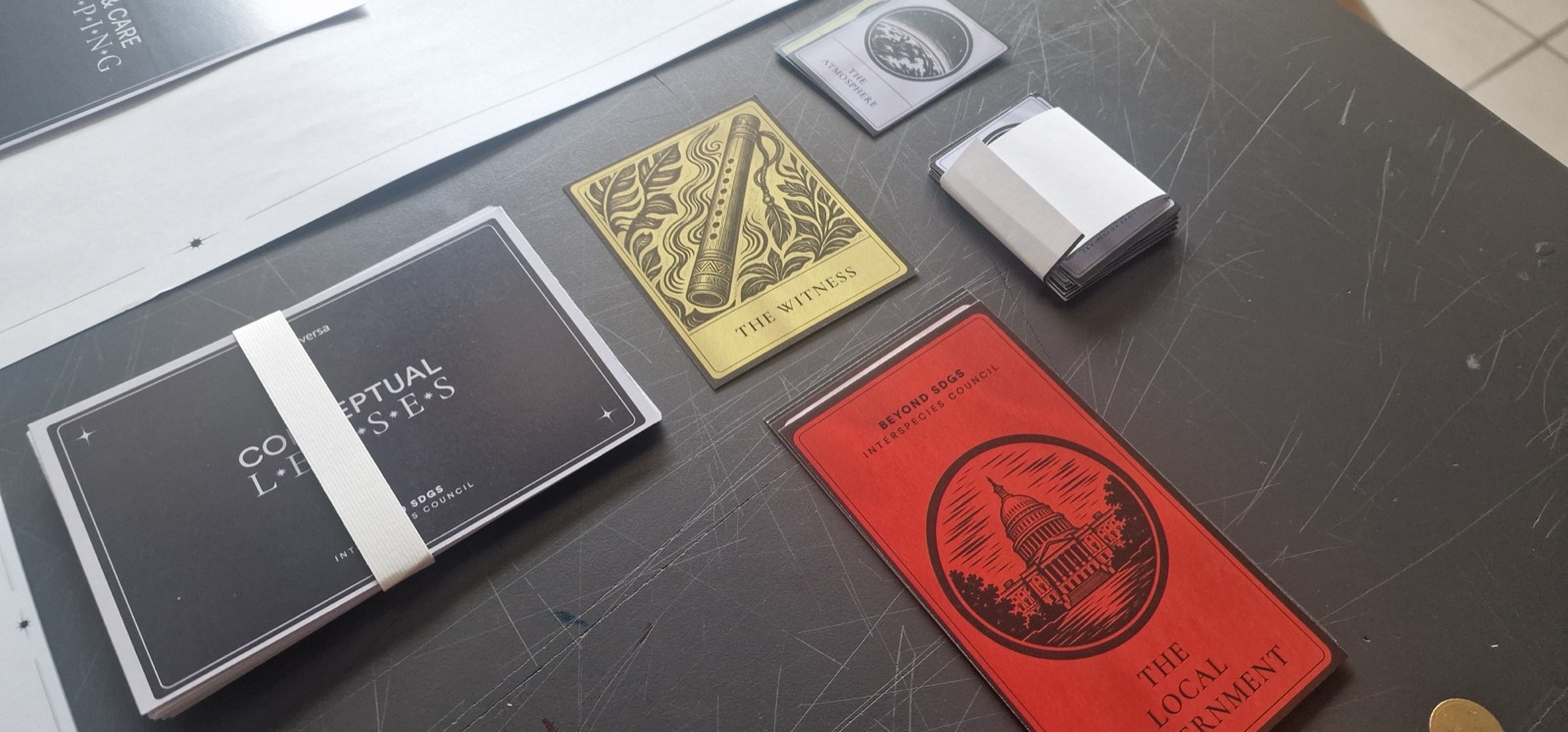
The Conceptual Lenses deck beside the Witness and Local Government cards.
Instead of debating objects or products, each table mapped relationships: what is celebrated as success, who benefits and who bears the cost, which relationships sustain the vision, what is being sacrificed, and what forms of care could open a just future. Threads connect the roles; sticky notes mark harms, tensions and practices of care. The map is not a deliverable — it is the trace of the conversation.
16
participants
20
roles in play
5
rounds of rotation
3h
time-boxed
Each table received a scenario: a 2050 future in which a promise of sustainable development has largely been kept — and has produced its own tensions. From their roles, participants asked the same four questions of every one: What do you value in this future? What worries you? What relationship must be protected? What responsibility do you hold?
Councils where human and more-than-human representatives decide on water, energy and land use. Biodiversity and democratic participation improve; decisions grow slower and more complex. Who can legitimately represent a more-than-human being?
Growth is abandoned as the measure of progress in favour of ecosystem health, care time and community wellbeing. Ecosystems recover; whole industries disappear. Who bears the costs of the transition?
Every policy, infrastructure or innovation must prove benefits for the next seven generations before approval. Ecological degradation falls; decisions become slower and more contested. Who can speak for those who do not yet exist?
Flexible citizenship, territorial hospitality and shared governance meet rising human mobility. Cultural diversity and regeneration coexist; tensions over belonging persist. Are there legitimate limits to mobility?
Scientific, Indigenous, community and ecological knowledge decide together. Solutions grow more resilient and culturally apt; disagreements over legitimacy remain. Who decides what counts as evidence?
Before deliberating, every table received a set of lenses — not a vision of the future, but a way of thinking through relationships, plurality, care and responsibility. They are lenses for deliberation, and they replace the language of targets.
| 01 | We are constituted through relationships and responsibilities |
| 02 | Many worlds deserve to coexist |
| 03 | Knowledge is plural and difference is generative |
| 04 | Care sustains the world |
| 05 | Those affected deserve representation |
| 06 | Repair precedes progress |
| 07 | Flourishing is cultivated through practice |
The SDGs gave the world a shared language and a deadline. What a goal cannot do is hold what development has already broken, or seat those who never had a chair. This council does not seek efficiency, immediate consensus or fast output — it seeks complexity, listening and a shift of perspective. That is the minimum condition for deciding together in a world we share with far more than ourselves. Principles, unlike targets, do not expire in 2030.
This council was convened by members of our Pluriversa Community, working across Italy and Colombia:
Service & Strategic Designer
Service & Experience Designer
Service & System Designer
Researcher & Critical Designer
Director
Participatory design, collective-intelligence facilitation and strategic foresight, tailored to your context. No recipes, with method.