

Our actions
Speculative futures of Web3 for post-development
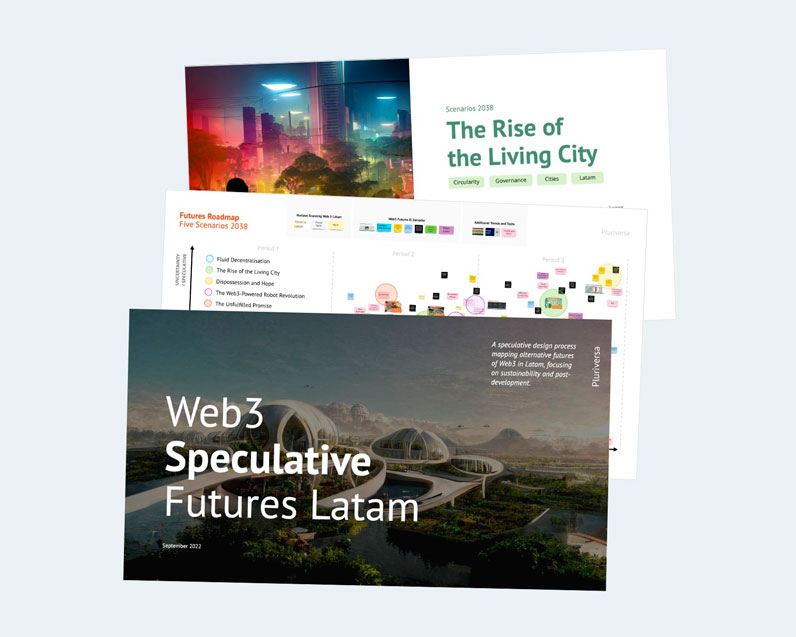
A strategic foresight and speculative design process that imagines alternative futures of Web3 in Latin America, with regeneration and post-development at the centre. Five scenarios set in 2038 to rethink how to steer this technology —for good.
Partner
FCDO · Government of the United Kingdom · Frontier Tech Hub
Year
2022
Services
Strategic foresight · Speculative design · Policy recommendations
CHALLENGE
The global debate on Web3 reaches the South importing a Northern frame: techno-optimism, speculation and the old promise of «development». The underlying question: what opportunities and challenges does Web3 really pose in Latin America for cooperation institutions?
APPROACH
We change the question: from «Web3 for development» to «Web3 for post-development». From there we deploy a process of speculative design and foresight: instead of projecting today’s technology, we imagine radically different worlds and trace five possible trajectories for the region.
IMPACT
Five speculative scenarios set in 2038 and policy recommendations across five fronts, to help international cooperation steer Web3 toward desirable and sustainable futures for the region.
Not «Web3 for development».
It's Web3 for post-development.
For three decades, thinkers from the South have questioned the very idea of «development». This is not a semantic nuance: it completely changes which Web3 futures are worth imagining.
The starting point
«Development»
A colonial, hegemonic concept from the Global North: hierarchical, extractive and unjust. And one that, for much of the region, simply did not work.
Our frame
«Post-development»
Local, plural, decentralised, solidarity-based and autonomous. Asking about Web3’s role in the South necessarily demands this lens.
Imagine worlds, not apps
Speculative design does not predict: it expands what we consider possible. Instead of imagining Web3 as apps within today’s world, we place it inside worlds radically transformed in their politics, infrastructures and everyday life —the way the world changed with electricity or the automobile—.
We map ideas, tensions and speculative cases onto a futures roadmap with three time horizons and an axis of certainty versus speculation. From it emerged five trajectories —the five scenarios— and, from reading them, concrete public-policy recommendations to steer the technology.
5
speculative scenarios
2038
the year we inhabit
5
policy fronts
Five speculative futures for 2038
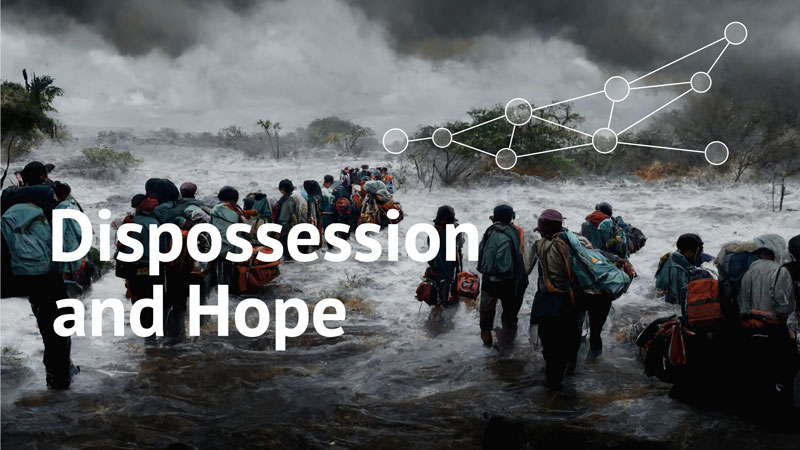
We don’t think of Web3 as apps within today’s world, but within radically transformed ones. Each trajectory is a story set in 2038: step in and read the whole thing.


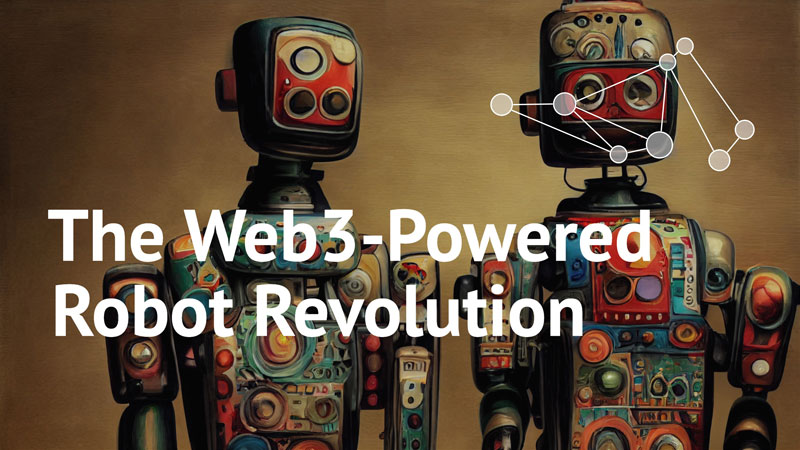
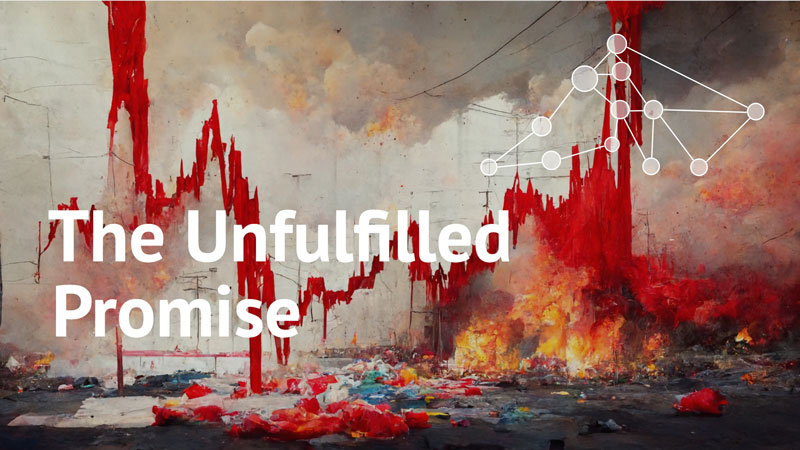
04 · The Web3-Powered Robot Revolution
Artificial Intelligence · Robotics · Crypto
From speculation to public policy
From the scenarios we drew recommendations to steer Web3 toward the plural well-being of the region, organised across five fronts. For each we identified emerging themes, key requirements and provocations from the future.
Governance
Political-territorial redistribution · new governance models · citizen participation and control through Web3.
Environmental
Climate risk and biodiversity loss · regeneration of cities · circularity · cross-border protection.
Education
Knowledge building · new technology markets · resilience against volatility and scams.
Social
Post-development · social struggles · new illegalities · mass migration · autonomies for the common good.
Technology
Web3–IoT–AI relationship · citizen participation · ethical use of data · communities building their own technology.
Speculating is a political act
Imagining futures is not guessing: it is widening what we consider possible so we can decide today. These five scenarios are not predictions, but tools for cooperation and communities to steer Web3 toward a more just, plural and regenerative South.
Let's design desirable futures for your territory
Strategic foresight, speculative design and systems reading to anticipate change and decide better under uncertainty. What comes next is designed by talking: 30 minutes, no slides, no commitment.